


Volume 50 Issue 6 - June 2012 : Sports
Olympic dream lives on
Author : Lucretia Chima
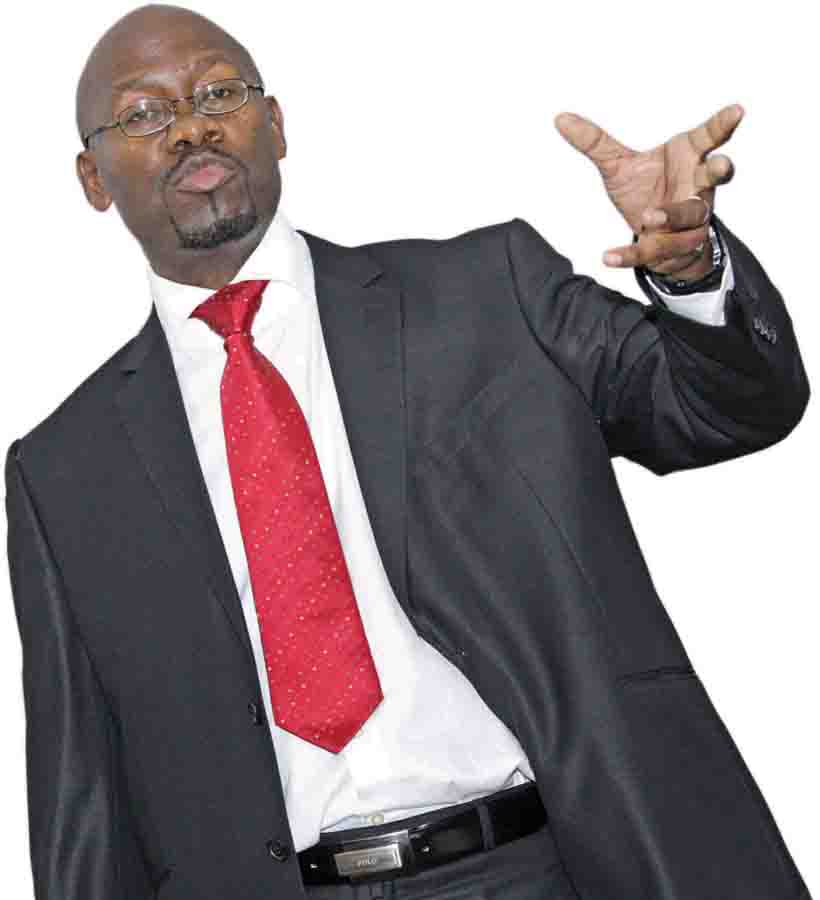
On both divides of the spectrum, UB Tsholofelo Boxing Club epitomises the most successful club in the country while its members are arguably the most decorated boxers ever.
The club, an affiliate of Botswana Boxing Association (BoBA), has represented the country notably in both regional and international meets. France Mabiletsa together with some boxers formed the club in 1985 but when the latter’s boxing days ended they quit the club.
Believing that success is what you get when opportunity meets preparation this did not discourage Mabiletsa who continued forth with the club. It is undeniable that the club has not only produced best boxers but officials such as coaches and administrators, a constituent that has earned the boxing association tremendously. From this BoBA was able to repeatedly scoop the best-executed plan category and code of the year.
Since inception Tsholofelo has been training with UB Boxing Club which later led to the two parties agreeing on a training and competition pact. The club then came to be referred to as UB Tsholofelo, a move that has made it to be a cut above the rest.
To date, Tsholofelo has won the Mooka Mageu Championships three times and Tsholofelo won the same competition twice. Their vision has always been to ensure that boxing is among codes represented at the Olympic Games, thereby producing boxers of calibre who consistently make part of the national team.
Some of its decorated members include founder member Mabiletsa who retained the national champion title from 1981 till 1994. He proved his mettle by bringing the country’s first Commonwealth Games medal in 1994.
As if that was not enough he went on to set a pace when he brought the country’s first All Africa Games medal in 1991. The UB Tsholo chairman made headlines when he garnered some medals from FESCAABA boxing championship in 1982, 1992 and 1994. He brought silver, bronze and gold consecutively.
He is among a few sports personalities who have been awarded presidential honour for meritorious service in sport and was also awarded certificate of excellence in boxing by BNSC. UB Tsholofelo produced the likes of Lechedzani Master Ludza, Gilbert Khunwane, Khumiso Ikgopoleng, Healer Modiradilo, Lesley Sekotswe, Thuso Otukile, Jonah Ramasia, the late Ogaisitseng Medupe and Bikie Malaolo.
Master’s name is still fresh in sports fanatics’ minds as he was one of the boxers who ended the dry spell of medals in the country by scooping medals from regional and international meets. Master has won two gold medals from the 2003 and 2005 Commonwealth Games and silver from the 2002 games.
He received a gold medal during the Africa championship and qualified for the 2004 Olympic Games though he did not bring any medal. He boasts of gold medals from the2005 Kings Cup, two Zone Six gold medals from 2003 and 2005. He was the national champion in 1999, 2000, 2002, 2004, 2006 and silver medallist in 2003. The 51kg star was boxer of the year 2002 and sportsman of the year in the BNSC sports awards. In 2006 he was awarded Presidential Certificate of Honour.
Khunwane needs no introduction too as he is among celebrated sportsmen that ever happened to this country. Just like his club mates he was the national champion for the year 1998, 2000 and 2004. He brought a bronze medal from the 2003 Africa Boxing Championship, another bronze from2002 Commonwealth games.
He was crowned the 1999 BNSC Sportsman and Sports Person of the Year, a rare feat indeed.
The retired Khunwane also has a bronze from the 1999 All Africa Games. Among the club’s products is Ikgopoleng - one remarkable boxer who has plied his trade as a national team member longer than his counterparts. He is one of the most decorated boxers so far.
Ikgopoleng who is currently the national team coach was ranked fifth in the world and was invited for Top Eight boxers in each category in 2009. He was a quarterfinalist at Seoul Olympics in 2008. He was crowned 2008 Sportsman of the Year during the BNSC Sports Awards and was number three boxer and bronze medallist at Olympic qualifying tournament. He is 2007 All Africa Games bronze medallist.
He was the boxer of the year in 2004 and 2008 locally. He went on to scoop the best foreign boxer and a silver medal during the Batalia de Carabobo Cup in Cuba in the same year. The coach won a bronze medal in the same competition held in Venezuela to mention a few and was Zone Six champion and national champion from 1999 to 2001.
He was also awarded the promising male athlete award during the 2001 BNSC awards. The national team coach came home with a bronze from the 1999 AIBA Africa ranking tournament.
Another celebrated sports legend in the club is the 1994-1995 Zone Six champion Modiradilo who is driving the successful Botswana Boxing Association programmes. The SDO also won silver medals from the 1994 and 1995 FESCAABA games. He was bronze medallist in 1996. Modiradilo was the national champion from 1991 to 1997.
It is 17 years now but the dream of clinching a medal from the Olympics lives on as UB’s Tsholofelo boxer, Oteng Oteng, has repeated his teammates feat by being the only boxer to qualify for the London Olympic Games due in a few weeks time. Now Batswana are pinning their hopes on the youngster to redeem the code and the country by bringing a medal from the prestigious games.
In 1988 Mabiletsa of Tsholofelo and Shakes Kubuetsile of UB were selected to represent Botswana at the Seol Olympics. Mabiletsa could not make it due to work commitments and was replaced by Magare Tshekiso of Jwaneng Boxing Club. These were the last Olympics in which boxers were to participate without first qualifying.
France was the only boxer to qualify and represent Botswana at the Barcelona Olympics in 1992. In 1996 Modiradilo, also from Tsholofelo, became the only boxer to qualify and represent the country at the Atlanta Olympics. He was followed by Khunwane who was the sole representative at the 2000 Sydney Olympics. In 2004 Ikgopoleng and Luza qualified and participated at the Athens Olympics while in 2008 Khumiso joined by Thato Batshegi of Jwaneng Boxing Club qualified for the Beijing Olympics.
Mabiletsa still admits that it is not easy to run a competitive club due to limited resources hence they use former Olympians as coaches given their experience. “We use the previous boxers’ achievements as a benchmark for those in the national team. We require them to bring whatever best medal that boxing could bring from each competition, so that makes them up their game,” emphasises Mabiletsa.
It is mandatory for the coaches to produce boxers for the Olympics and use advanced systematic methods of training different from other clubs and guided by training programmes agreed by coaches.
Today the club boasts 11 boxers and is led by visionary leaders. Mabiletsa is at the helm, while the only female leader, Boipelo Muyambo, is UB manager. Thuso Otukile is Tsholofelo secretary general while Luza is UB Head coach. Ikgopoleng is Tsholofelo head coach. Moagi ‘Simple’ Masake, Modibedi Modibedi and Khunwane are additional members.
Although the club is able to accommodate several boxers, only a few can stand the stringent training programmes hence the sizeable members. Mabiletsa believes that winners stand out because every time they come before a wall they look for the door that leads to the next room - they never give up.
He says this makes it more manageable to groom them to be ready for international competitions. The chairman, who is known as a disciplinarian, is upbeat about discipline in his club. He says they deal with the boxers’s lives holistically, as welfare includes their career and how they live, noting that they have a relationship with each boxer’s relations.
“We, however, still lose more capable boxers due to academic and other family commitments. We have AIBA qualified coaches in Master Luza and Khumiso Ikgopoleng who are ranked “Star 2” of overall three stars.’ Khumiso is also an accredited AIBA instructor who specialised in boxing during his physical education degree in Cuba.
The rated coaches impart their knowledge to the boxers especially on issues of prohibited drugs, latest developments in Olympic coaching and scoring systems.
“Winners don’t trust small powders or injections to overcome their opponents, it’s a big No! It takes zeal and commitment to conquer your opponents.
The UB Tsholofelo boxers have an added advantage as most of the officials are qualified teachers who are always ready to assist the boxers academically.”
Although some boxing clubs have come and gone such as Molepolole Boxing Club, due to financial constraints, the chairman hails the clubs’ pact. Tsholofelo are the administrators of the clubs while UB supplies the facilities. They combine their championship winnings to run the club mostly in meals and accommodation especially in away tournaments.
Since funds are never enough, club officials’ end up digging deep into their pockets whenever there is a shortfall. They do not ask for contributions from boxers but expect them to use that for their training and transport.
Those in the national team often give some of their competition and training attire to those that do not make it into the national team, something that promotes team spirit.
Although Oteng is now under BoBA directorship and Botswana National Olympic Committee, the club chairman expresses delight that he is being coached by Khumiso. Thus, the club spirit will continue. Their desire is for Oteng to get employment in a boxing field as he is presently unemployed and not schooling.
Although the Olympics are known for housing the best, the club is expecting OT to do more than his best. Botswana is hoping for a miracle from him, so is Africa, given that continental boxers have always had a mammoth task in their bouts to attain medals from the Olympics. On another note, local boxers are yet to beat the quarter-final mark after Ikgopoleng made it in his second appearance at the Olympics Games. With good training and support, anything is possible!