


Volume 50 Issue 11 - November 2012 : Entertainment
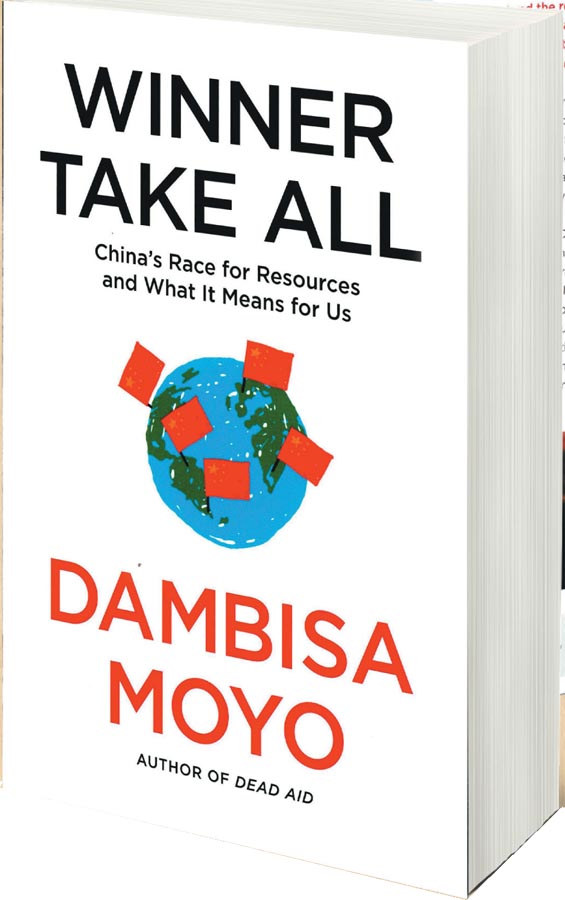
Winner Take All
Author : Pako Lebanna
China, the world’s most populous country, has achieved a lot over the past 3 decades, to become one of the most powerful economies on earth, but this was no always the case. A country with an proud history of dynasties that date back millennia, the country under Mao Zeodong (‘Mao Tse-tung,’ or ‘Chairman Mao,’ leader of the People’s Republic of China 1949-1976) experimented with his socio-economic and political reforms, including the Maoist ‘cultural revolution’ and ‘giant leap forward’, to limited success.
Mao’s successor, Deng Xiaoping, made market reforms to the Chinese Communist Party’s Maoist policies, and set himself what seemed to be an impossible target of quadrupling his country’s economy from 1980 to the year 2000.
This target was achieved by 1996, and the next ambition, of doubling the size of the economy up to 2010, was attained by 2008. “By 2011, China’s foreign exchange reserves- the largest in the world- had surged to over US$ 3 trillion” (Moyo, 2012: 87).
China’s insatiable need for the world’s resources, and her increased position in the world economy makes a book in the mold of Dambisa Moyo’s “Winner Take All: China’s Resources and What it Means for Us” a necessity.
The book takes a look at China’s voracious appetite for the world’s resources, and the ramifications for the rest of the world, and African states both cash in and face challenges in protecting their resources, and attempting to get the best deal for their commodities.
The Western world has clearly been worried by China’s rapidly rising dominance in the global commodity market, and there are questions as to China’s tactics in adding sweeteners such financial assistance to state projects in Africa, even to some corrupt regimes, in order to secure construction and commodity tenders.
China’s rise from being a rural agrarian society into the world’s second largest economy within 30 years has been a momentous event in history; their economy has grown at a more rapid pace than the United States did in the late 1800s and early 1900s.
China is now set to surpass the US as the world’s largest economy by 2025. fuel this economic boom is the focal point.
From the abundant supply of aluminium, adequate supply of cotton and wheat to the scarcity of copper, lead and zinc givem the excess of global demand, Moyo looks at the impact of China’s participation in the commodity market. over the odds which then benefits commodity-reliant developing countries.
But the Oxford (PhD Economics) and Harvard (masters’) educated Zambian economist Moyo exposes some basic flaws in her book.
OPEC (the Organisation of the Petroleum Exporting Countries) is wrongfully referred to as “Oil Producing Exporting Countries” on page 47 and in the index.
The book is not particularly well written, relying more on a mass of statistics and facts peppered all over, without quality writing style to blend it all.
But given the world we live in, where African countries (which Moyo says prefer Chinese investment over Western aid), rely on China while having to protect their finite resources for long-term benefit, ‘Winner Take All’ is a worthwhile read.