


Volume 50 Issue 11 - November 2012 : Entertainment
BIKO....A Biography
Author : Pako Lebanna
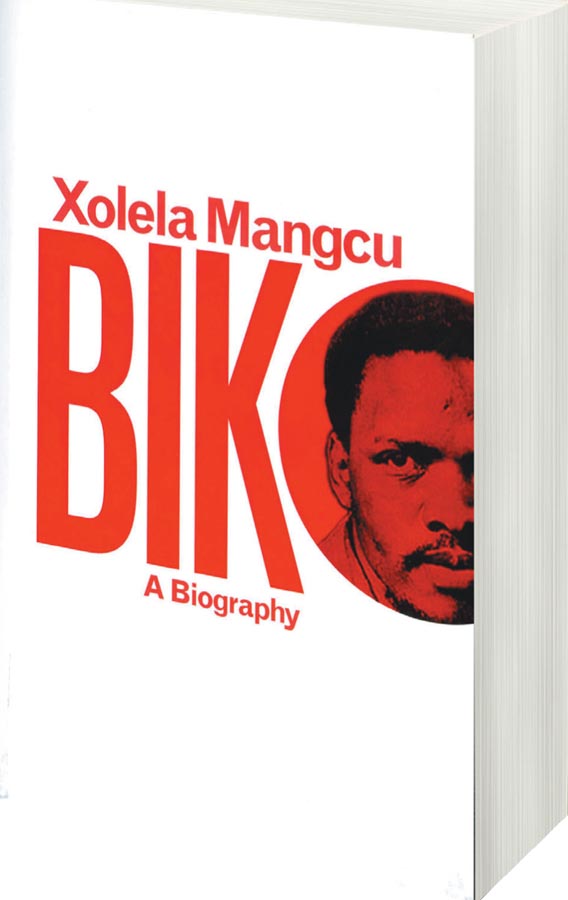
This is the work of slain South African Black Consciousness leader Bantu Stephen (Steve) Biko, detailing his personal life, his struggle against the apartheid system, and his brutal murder at the hands of apartheid security apparatus in 1977.
After the setting up of a ‘refreshment station’ by Jan Van Rieberk and his Dutch team on the Cape of Good Hope in 1652, Southern Africa would in the succeeding 3 centuries be dominated by settler European-descent communities, in South Africa, South West Africa (Namibia), Rhodesia (Zimbabwe), Angola and Mozambique.
Black people lost their sense of self-belief, having dominate Sub-Saharan Africa, and now finding themselves in a position of servitude, to a European master who was bringing in innovative technology, modern forms of farming, and a whole new lifestyle. As being dominated in their own lands had left African people in the region losing their pride, Biko turned to Black Consciousness philosophy, which had gained currency amongst the African Diaspora, which leaders such as Malcom X.
Biko was a distinctively African leader who sought to regain his people’s pride, and self-worth, a Xhosa raised in the Eastern Cape, Biko spent his time as a student leader in Natal before returning to his home province to the small town of King Williams Town. Mangcu delivers Biko as a whole, from his exemplary political leadership, to the problems encountered in his private life.
Biko fell in love with Dr Mamphele Ramphele while they were still student activists in Natal, but instead he married Nontsikelelo Mashalaba (Mrs Ntsiki Biko), a nurse at King Edward Hospital in Durban.
Biko married Ntsiki at the in King Williams Town magistrate court in December 1970. In his marital home, Biko had two children, Nkosinathi (1971) and Samora (1975); but he continued with his relationship with Ramphele, who moved to King Williams Town after completing her medical studies, and they also had two children, Lerato (who died just two months old in 1974) and Hlumelo (born early 1978, after his father had passed away in September 1977).
Biko had a fifth child, Motlatsi (the third born of the four surviving), with Loraine Tabane in 1977.
“Once they (Steve and his wife Ntsiki) had moved to King Williams Town, Steve was spending more time at Zanempilo Clinic where Mamphele Ramphele was the resident doctor.
Ntsiki eventually moved out of the matrimonial home and filed for divorce.
By the time of his arrest (and eventual death) Steve and Ntsiki were no longer living together,” (Mangcu, 2012, p 205) Mangcu details how leaders like Robert Sobukwe of the Pan Africanist Congress of Azania (PAC) tried to talk sense into Biko about being more exemplary in his private life, given that he was a national figure; but with little success.
But as a political figure, Mangcu talks of how Biko was an inspirational figure who not only took on the apartheid apparatus head on, but relied on philosophy to teach Black people to have a greater sense of
self-belief.
Mangcu gives chilling details of Biko’s death on September 12 1977.
Mangcu’s book, the first Biko biography, is a very good, instructive historical account on the life of an enigmatic historical figure.