


Volume 65 December 2026-January 2026 : Social
Shacks of the rich
Author : Mothusi Soloko
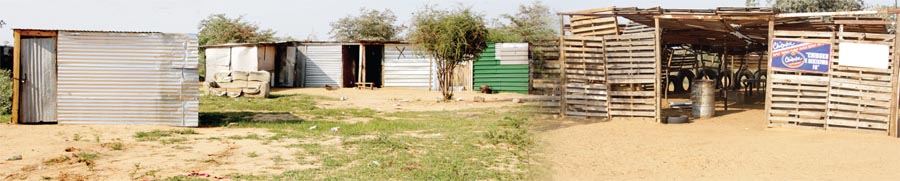
For those who call “Senthumole Ramadeluka, ”home, life is a desperate affair. The rusty iron sheets that make up homes here seem to project grinding poverty.
Inhabitants of this illegal squatter camp in Jwaneng behave more like a large group of social parasites. Begging from strangers and borrowing money from friends and relatives, scavenging in front of large supermarkets is ostensibly embedded as an integral part of their daily lives.
Taking a walk through the camp, one cannot help a flash of misery and alienation of living at the base of the working class beaming in the faces of many. At some point, stench from a rotten carcass of an animal sweeps across the camp while somewhere else green flies sniff around for garbage. Without running water residents here creep through the night to steal water from neighbouring households and some relieve themselves in the bush that surrounds the area.
“Living here is tough, there is no water. Some people here steal water from some houses or offices in town,” says 17-year old Olebogeng Mohubuwakoma who is already a mother of two.
To many children education, which is one avenue out of misery, is viewed as a leisure activity while those who happen to access it have to cushion themselves against an avalanche of challenges. “I used to skip classes and studying was not easy for me,” adds Mohubuwakoma.
Like many other illegal squatter camps, Senthumole Ramadeluka is an offspring of economic migrants who descended on Jwaneng with the hope of having a piece of the Debswana Diamond mining cake. But after subjection to long term unemployment and harsh living conditions they took solace in the camp. Senthumole Ndelu, as the place is affectionately known, appears more like a town in abyss.
Crime is rife in this squatter camp. What we hear from its inhabitants and council officials is that there are also brothels and prostitution is prevalent as well. Young males here allegedly use Marijuana as a form of escapism from the vicissitudes of life.
The shacks here do not belong to the poor but it is the rich “guys” in Jwaneng who allegedly rake in hefty profits by creating the shacks and renting them out to the “Renting a shack costs around P150 per month and many of them belong to some of the wealthy people in town,” says Jwaneng deputy town clerk, Odirile Mabaila. There are illegal bars and shebeens while residents use power generators for electricity.
For unscrupulous business people in Jwaneng, “Senthomole Ndelu” reserves an army of labour for menial jobs. While the women are exploited through domestic chores, men sweat for peanuts in farms.
Likewise, while the rest of the community enjoys health programmes, this community of the underprivileged can ostensibly dream about them. District health management technician, Malebogo Ranko, says it is not easy to provide health amenities here because the area is not a recognized settlement. “They are vulnerable to diseases.
In some instance there are about eight people living in a one-roomed shack. We appeal to authorities to take necessary steps in relation to the settlement,” pleads Ranko.
A study of the Jwaneng Town Council undertook in 2010 reveals that at that time 1 262 people lived in the settlement of which 64 were foreigners.
“That number could have doubled by now because we see new structures there,” town principal town physical planner, opines Gothataone Radiselo. Whichever way one looks at it, the settlement is slowly swelling into a hub for criminal activities and lawlessness for it is a product of lawlessness itself.