


Volume 50 Issue 3 - March 2012 : Sports
Chipolopolo: Triumph over tragedy
Author : Pako Lebanna
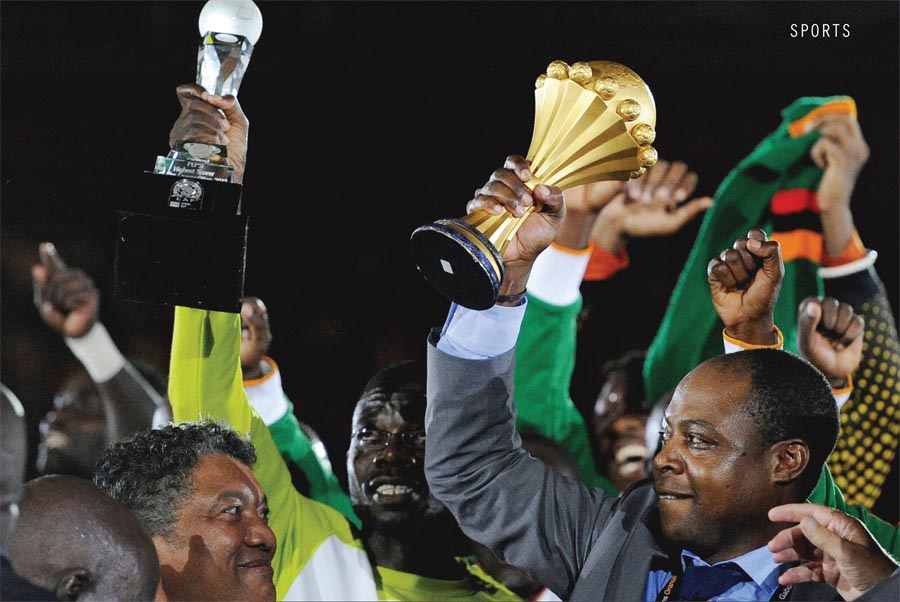
The clock struck midnight, signaling the advent of a new day. A that time a majority of people are normally fast asleep except for those engaged in nocturnal activities. But for Botswana’s neighbours north of the Zambezi, on this particular night, virtually the entire nation was up.
Even witches and sex workers, notorious for competing with bats for nocturnal activity, had cast aside their day jobs, nay, night work, and were actively glued to their television or radio sets. The nation’s hopes lay with their national football team, contesting a pulsating Africa Cup of Nations final against favourites, Ivory Coast.
The wee hours of Monday February 13, 2012 shall forever be etched in the psyche of the Zambian nation. A game that began at 9:30pm the previous evening dragged on to a few minutes past midnight the next day, and ended in triumph for a country fully deserving of this accomplishment.
When Stoppila Sunzu‘s penalty struck the net, it triggered wild celebrations as Zambia were confirmed African football champions for the first time in history. However, this was no ordinary victory. It signaled the triumph of the human spirit over tragedy.
The Zambians made it clear before the tournament that they wanted to pay tribute to the 18 members of their squad who lost their lives off the coast of Gabon in 1993 after a Zambian Air Force Buffalo aircraft, which had refueled in Libreville en route to a USA 1994 World Cup qualifier against Senegal in Dakar, crashed into the sea just 500 metres after takeoff.
However, not many people had given Chipolopolo, as the Zambian squad is affectionately known, a chance from the onset.
Ghana, Ivory Coast and Senegal were viewed by most pundits as pre- tournament favourites in the absence of reigning champions Egypt, World Cup 2010 African representatives Algeria, Nigeria, Cameroon and South Africa, who
had all failed to qualify for the AFCON 2012 showpiece in Equatorial Guinea and Gabon.
Zambia reached the final by brushing aside teams like Ghana and a Senegal side laced with European-based professionals. The Senegalese squad included Newcastle United’s Demba Ba, who enhanced his reputation before the nations cup, scoring 15 goals in 17 English Premiership matches, including a great strike against Manchester United.
Despite Zambian exploits in setting up that fateful final in Libreville, the critics were not convinced.
Continental sports channel Supersport anchor, Mahmadou Gaye, predicted a 4-0 victory for the Ivory Coast before the final. Conversely, the Zambians showed no respect for the star-studded Ivorians, taking the game to them with their fast- paced, one-touch carpet football.
Fifteen minutes into the second half, Ivorian star, Gervinho, who plies his trade with Arsenal in the English Premiership, was felled by the Zambian defence, and no less an imposing figure than Chelsea superstar Didier Drogba, two time African footballer of the year, stood up to take the resultant penalty.
Drogba blasted the ball over the bar. A couple of other times the Ivorians visited the impressive Zambian keeper, Kennedy Mweene, they found him assured.
It remains a mystery why Ivorian coach François Zahouri took off former Barcelona star midfielder, Manchester City’s Yaya Toure, five minutes before the end of the 90 minutes, as his experience was in short supply in extra time.
It came down to a nerve wrecking penalty shootout, Zambia emerging 8-7 winners in sudden death after Gervinho missed his spot kick and Sunzu won the tournament by placing his kick beyond.
Zambian coach, Hevre Renard, with his model looks grabbed the attention of female viewers across the globe with his fashionable white shirts but it was his football tactics that conquered the continent.
The Zambian nation celebrated becoming African champions in the Gabonese capital of Libreville, a place which 19 years ago had been a source of national sorrow.
The team that perished had shown rich promise, beating Italy 4-0 en route to the 1988 Olympic quarterfinals in Seoul, South Korea, and had the potential to qualify Zambia for her maiden World Cup appearance.
Renard and his team laid the ghost of Libreville to rest, and returned to a hero’s welcome in Lusaka, parading the Africa Unity Cup (the AFCON trophy) before an ecstatic nation.