


Volume 50 Issue 8 - August 2012 : Heritage
The 1947 Royal Visit to Lobatse
Author : Sandy Grant
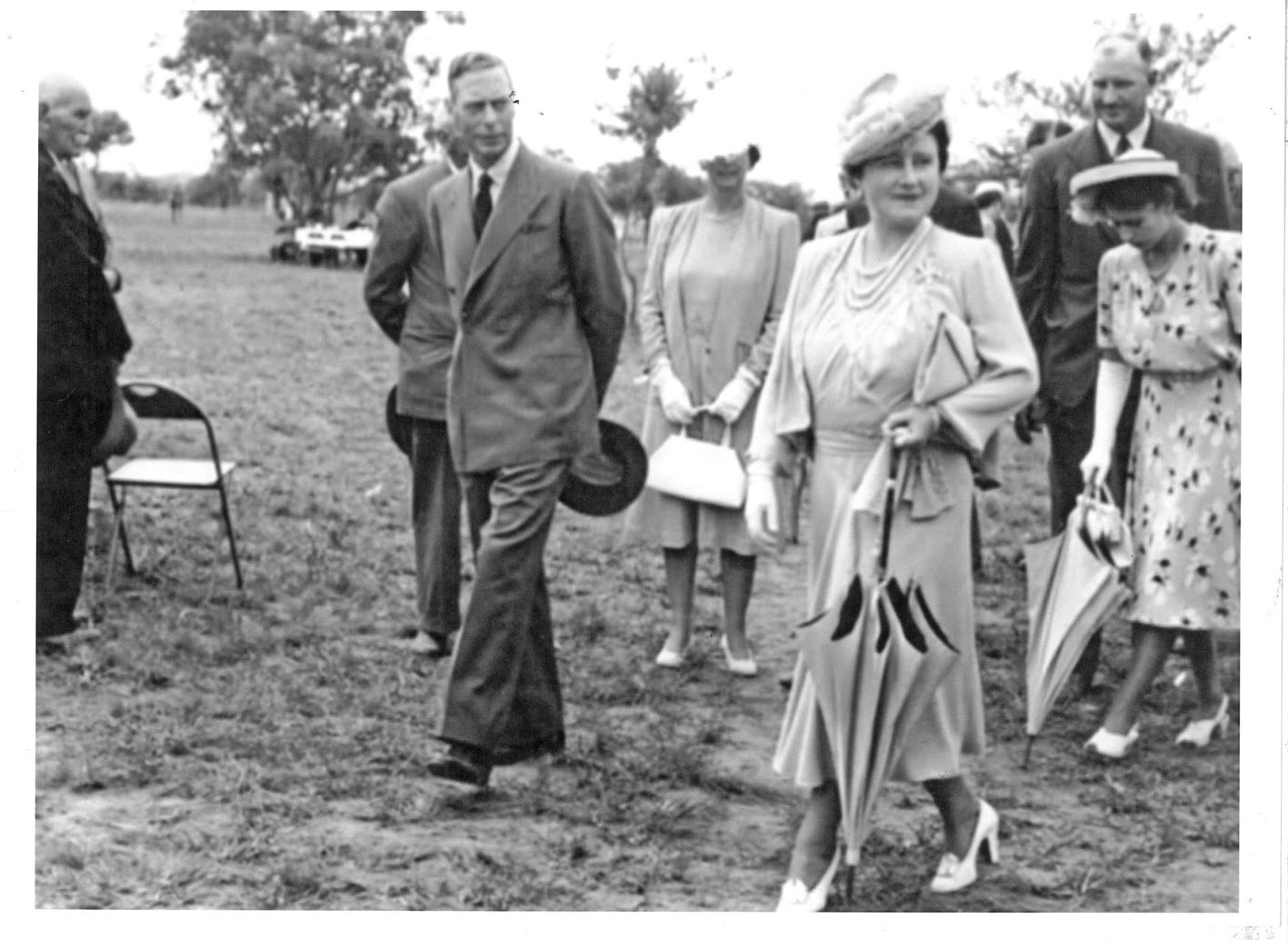
On the 17th February 1947, the very beautiful Royal Navy battleship, HMS Vanguard (I have an illustration of it on my office wall), docked in Cape Town. It was carrying King George VI, Queen Elizabeth and their two daughters, Princesses Elizabeth and Margaret for a three month visit to the countries of Southern Africa, South Africa itself, Southern Rhodesia, Swaziland, Basotholand and the Bechuanaland Protectorate which they would transverse largely by train. The visit, naively intended by those who planned it to provide a relaxing break for the King and Queen after the strain of the 2nd World War and its crippling immediate aftermath, proved to be exhausting relentlessly demanding and especially in all three of the High Commission Territories, hugely successful.
Retrospectively, looking at their three month itinerary, their stop off visit to this country might appear abrupt, even grudging – save that foreign heads of state now routinely arrive by plane and depart with even greater abruptness. But the circumstances of 1947 are so hugely different that it requires imagination to re-live that particular visit. What happened? The Royal Family arrived from Bulawayo in their, by then, famous Blue Train, reached Francistown at 3.36 pm on the 16th April (1947). According to the later report of Anthony Sillery, the British Resident Commissioner, the King, realizing that a large number of people had gathered at the station, left the train in order to respond to their greetings. In the event, there were none. The people who were gathered there were dead silent. Sillery trying to cajole them into life, failed and had to explain that the Batswana, unlike the people he had encountered elsewhere – he had visited Basotoland and Swaziland the previous month – were reserved and undemonstrative. The King suggested therefore that it might help if he were to tell everyone who he was! Eventually personal reserves fell away and those gathered became noisy and warmly welcoming. Down the line, at Shahse, the family spent time buying tokoloshe wood carvings, touched Palapye and Mahalapye and even in the night, left the train to greet people assembled at those stations. They then passed through Gaborone and at 7.00 in the morning on the 17th arrived at Lobatse where the King and his family were due to meet the people of the Protectorate, the train stopping at a specially created railway loop styled Lobatse Royal which was adjacent to the ceremonial site. The programme for the Royal Family was compact – certainly when compared with the arrangements which are routine today for almost all formal occasions – beginning at 10 o’clock with inspections of the troops who had served in the recently ended war and the Guides and Scouts, a presentation of medals and honours, a tea ‘party’ and a final leave taking at 12.55 – the train itself left Lobatse at 2.15 pm presumably to reach Mafikeng at a reasonable time of day. The full programme had involved an extraordinary amount of planning and preparation. An estimated 25, 000 people attended, (amongst them 2, 000 Europeans) and 2- 3, 000 children the majority having been transported to Lobatse by specially organized trains which were run over a two day period. R.A.R. Bent in his book, Ten Thousand Men of Africa, suggests that seven trains were used whilst an official report of the visit maintains that there were nine, the latter number including the trains laid on for children. The total numbers planned to board these trains are of some interest. At Pilane, there were 600, at Gaborone, 5,100 (many must have come from Molepolole), Ramaquabane 100, Tshesebe 50, Francistown 600, Shashe 200, Serule 300, Ramotswa 300, Palapye 1, 600 and Mahalapye 200. Of the children, 2,048 who were described as ‘African’ were accommodated in 100 tents and 70 were ‘European’ of whom 41 came from Francistown and Tshesebe. The 15 children described as ‘coloured’ were sent back when it was learnt that had been an outbreak of diphtheria in their school in Francistown. Accommodating and feeding such numbers presented the administration with enormous problems but post visit reports, whilst detailing the measures taken, and the costs involved invariably ended with expressions of thanks to all those who had been so successfully involved.
Some of these reports provide fascinating and sometimes amusing information. The two thousand children who were fed for three days required three loads of firewood from Hildavale Farm (presumably with a five ton truck), 44 bags of mealie meal (today 50 kg), 10 bags of sugar (probably 12.5kg), 900 lbs of meat (408 kg), 30 lbs of tea (13.6 kg) and 200lbs of salt (90 kg). Sports events were separately organized for the European and African children – the first prize for wines in the former category being a new crown piece, second being three shillings, and thri onne shilling. Only a few of the collective children experienced minor health problems whilst among the adults the one casualty was ‘the African orderly who refreshed himself too freely with the medicinal brandy.’ Overall it seems evident that the day was a brilliant success with order being maintained throughout even though only a handful of police were present. The high spots were undoubtedly the King’s inspection of War veterans and the impromptu surge of children behind the royal family as they drove away from the arena – something that was particularly appreciated and enjoyed. And in the evening, there had been a fireworks display. But for the King there had been one particularly awkward moment which Sillery described in his report to the High Commissioner in Pretoria, Sir Evelyn Baring who, being ill, had been unable. ‘The King saw Mrs Moremi* bearing down on him with a big hat on top of her head to have a medallion put around her neck. I overheard him say to the Queen, ‘how am I going to do it?” then, with a little gesture of resignation, he said, ‘I shan’t try’ and handed it to the lady with a pleasant smile. *Pulane Moremi, regent of the Batawana 1946-64.