


Volume 50 Issue 3 - March 2012 : Art & Culture
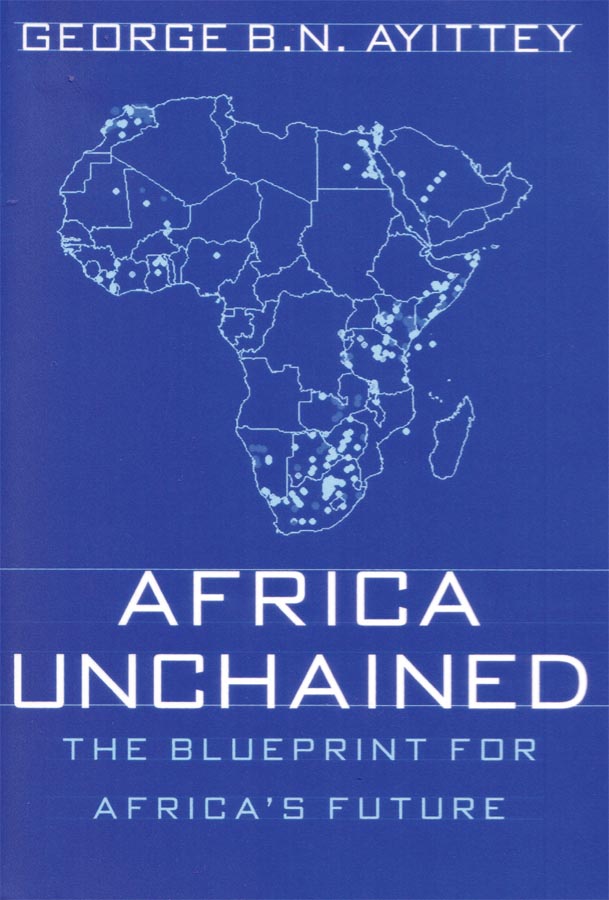
Africa Unchained: The Blueprint for AfricaÔÇÖs Future
Author : George BN Ayittey
Reviewer: Pako Lebanna
Publisher: Palgrave McMillian
Ayittey, a Ghanaian economist, author and president of the Washington DCbased Free Africa Foundation, an organization that advocates for free market capitalism on the African continent, proposes a blueprint for the industrial development of the African continent with this title.
Much of the book gives a succinct analysis of the problems that have beset post-colonial Africa, such as maladministration and corruption that have robbed the continent of its riches. Ayittey criticises the mentality among Africans to blame the continent’s woes on slavery, colonialism and neocolonialism.
The book is critical of the ‘statism’, that is the state-led developmental model that dominated post-colonial African economic planning, even for states such as Botswana and Kenya that were perceived to choose the free market model over socialist approaches.
Ayittey observes that “although Botswana has been a shining black African economic star, statism has also been discernible and specifically benefits the cattle-owning and agricultural elite, who were instrumental in establishing the dominant political party” (Ayittey 2005, p 73).
The book proposes that free trade, lessening restrictions and inculcating a “free market tradition” as being the panacea for Africa’s economic woes. Ayittey encourages governments to empower individuals, especially the rural poor, who should be the basic block of the free market society, by producing agricultural produce individually and freely trading in small markets.
While ‘Africa Unchained’ gives the reader great insight into what has gone wrong over the first five decades of African independence, the solutions given by Ayittey leave him open for criticism.
The trade liberalization he proposes, and its attendant privatization and deregulation, were tested in the IMF/World Bank Economic Structural Programmes (ESAPs) that failed in most of Africa.
What he rejects as ‘statist’ approaches in countries like Botswana have enabled the state to generate funds from public enterprises such as the BMC, and finance infrastructure development - roads, clinics, schools, electricity, housing- that have not only benefited the “cattle-owning and agricultural elite” but the very ordinary masses Ayittey believes can be empowered by what Adam Smith called “the invisible hand” of the free market.
A recommended read though, the book leaves the reader the wiser about the history of economic development planning on the African continent.