


Volume 65 December 2026-January 2026 : Entertainment
Kgalema Motlanthe, A Political Biography
Author : Pako Lebanna
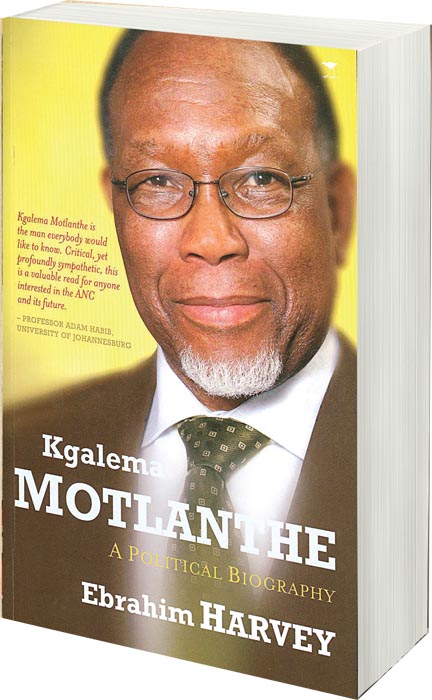
Kgalema Motlanthe rose since the advent of South Africa’s new democratic dispensation to become the President and now Deputy President of South Africa, becoming one of the most powerful figures in African politics. In this book, biographer Ebrahim Harvey gives the background of Motlanthe from his ancestry in what was then Northern Transvaal, his family home in Marapyane north of Pretoria, his birth in Alexandra Township and upbringing in Meadowlands, Soweto, to his involvement in the anti-apartheid struggle and post-apartheid state.
Motlanthe was detained on Robben Island because of his anti-apartheid work and upon his release was involved in the leadership of the National Union of Mineworkers (NUM), and his “10 years in NUM rapidly educated him about the harsh realities of the racist apartheid world outside the Island,” (Harvey 2012: 75).
He is portrayed as a selfless leader who could have been the first premier of Gauteng (he had been the first ANC chairman of the PWV region that became Gauteng after the organisation was unbanned in 1990), and is said to have been more powerful during the transition period than most people realise but chose to work in the background.
Motlanthe was elected Secretary General of the ANC at the party’s 1997 Mafikeng Congress, and since then has continued to quietly rise through the ranks.
Harvey has written a very informative book; published at a time Motlanthe is anticipated to challenge South African President Jacob Zuma for the ANC leadership at the party’s elective Mangaung Congress.
It shows Motlanthe mostly as a positive leader, who is mature, and helped convince former SA president Thabo Mbeki not to fire Zuma from the ANC when faced with corruption and rape charges, arguing for the presumption of innocence until the legal process is exhausted.
Again, Motlanthe was against Mbeki being recalled from the South African presidency, being quoted as saying “I felt that whatever the ANC leadership thought of Mbeki at that point in time could not outweigh the need for a smooth transition from the old to the new leadership for both the party and state.”
But the discerning reader will note that Motlanthe- who accepted the job of caretaker president when Mbeki was recalled in September 2008- is someone who harbours a huge political ambition but tends to have a mature posturing about it.
A worthy read for those interested in contemporary history and regional politics. ENDS