


Volume 50 Issue 2 - February 2012 : Others
PALAPYE: Caught between village and town
Author : Mothusi Soloko
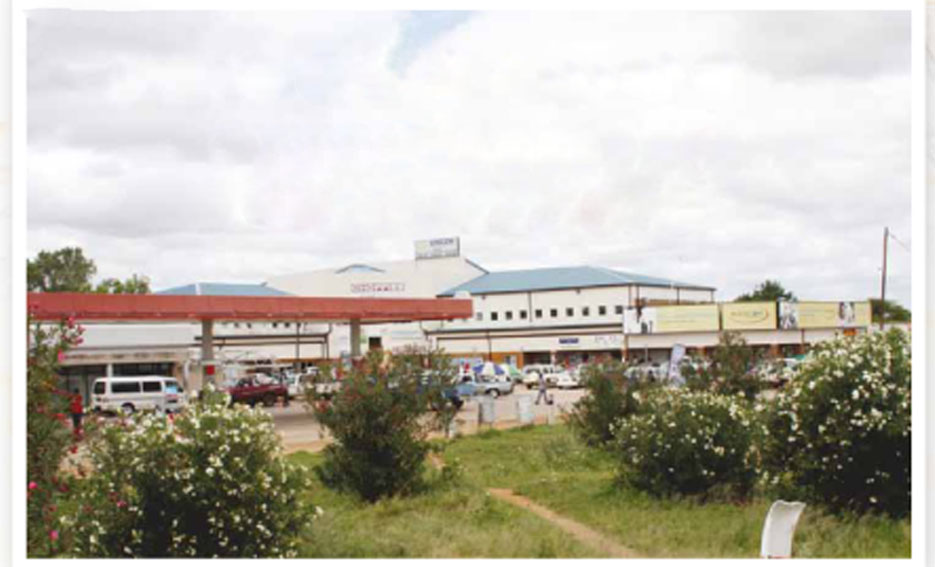
Every evening they routinely cram Small Bar near Palapye/Serowe Junction to quench their thirst after a day’s hard work. The men clad in grimy blue overalls and carrying yellow helmets in one hand, talk loudly and laugh uncontrollably. Literally they have displaced the neatly dressed public officers who used to be the buzz here. Consequently, the relatively quite atmosphere that used to prevail here has been replaced by the laughter and the loud conversations as if the men are competing for audibility with the blaring sound from the music jukebox. The cranking of cranes and the rolling wheels of heavy trucks that roar intermittently across the village do not help the situation either. Such is the enduring routine that Palapye residents have learnt to live with.
They are not complaining though. The men in blue, cranes, trucks and the attendant noise are all but symbols of transformation. Winding back, its location (strategically in the centre of Botswana’s eastern corridor - 240km away from Gaborone and 170km away from Francistown) has over the years made Palapye a convenient stopover on one of southern Africa’s principal north/south rail and road routes. Fast forward to 2012, the ‘village’ has not only transformed from just a convenient stopover and an appendage of Serowe but is slowly becoming an independent future city with a cosmopolitan feel.
Thus, the men in blue are employees of companies that are carrying out development projects that will probably transform Palapye into the country’s next city after Gaborone and Francistown. New developments include the much acclaimed but yet to be opened Botswana International University of Science and Technology that structurally rises gigantically from a nearby bush staring directly into a huge brick molding project, - Makoro Bricks.
Then where there used to be a tiny Morupule power plant hangs a web of power grids and pylons that will soon be Morupule B power plants expected to generate 600 megawatts of electricity to bring to an end the country’s grating power outages. The Botswana Development Corporation funded steel and glass manufacturing plants, a state of the art police station that greets one as they approach the village from the north and a state of the art 168 room capacity Majestic Five Hotel on the southern part, are some of the magnificent projects expected to alter the landscape and character of Palapye in a major way. Adding to the matrix of developments are ancillary projects such as housing units and shops that have all of a sudden set Palapye on an unprecedented makeover.
Also, the village boasts five accommodation facilities (Botsalo Hotel, Palapye Hotel, Desert Sands, Lecha Lodge including Majestic Five Hotel) in addition to countless bed and breakfast lodges that seem to pop out now and then.Six primary schools and three junior secondary schools complement Lotsane Senior Secondary School. There is also a primary hospital and five filling stations given that the ‘village’s main road has been described as the busiest intersection on the A1 (Francistown/Gaborone) Road. Thus, in 1997 Palapye was, according to Wikipedia, reported to be the fastest growing village in Africa with plans to expand its population from 30 000 to 180 000. To attest that, preliminary results of the 2011 Population and Housing Census put Palapye’s population at 36 211, having recorded an annual growth of 3.25 per cent from 26 293 in 2001. While Palapye is currently ascribed a village status, the writing seems to be on the wall that the “village” once a train station and transit route from the north and south to areas such as Serowe and Tswapong, is slowly gaining town status.
District development officer, Dintwe Oratile, concurs saying since construction of the new university commenced, there has been an upsurge of developments in Palapye. “With the private sector participation we anticipate more developments to come to Palapye. It’s a trickledown effect. Although the lifestyle here is still rural/ urban there is a greater possibility that the village will soon be declared a town,” opines Oratile. Oratile says while business people and parastatals scramble for business opportunities in the ‘village’, there has also been an upsurge in land use change by residents as they position themselves to benefit from the transformation process.
“Botswana Housing Corporation (BHC) has already applied for land here and there is generally an upsurge in business activities,” he says. Oratile’s office is also looking into ways through which they can identify business opportunities for disadvantaged members of the community. “We have to ensure that one way or the other, this transformation does not widen the gap between the rich and the poor,” he declares. Recently, Palapye Sub Council unanimously adopted a motion calling on local government minister to declare Palapye a town.
“It is inevitable that Palapye will soon be declared a town. We have Morupule mine and power station, Makoro Bricks and with the opening of the new university, steel and glass manufacturing plants, the village meets all the requirements of a town,” observes Palapye Sub council chairman, Onnetse Ramogapi. Ramogapi is of the view that were the village not declared a town soon, then the council will not be able to keep up with developments in the area.
“We need to have our own budget to keep pace with development projects taking place here. For us to have our budget we have to be declared a town and recent developments suggest Palapye will soon be declared a town,” he says with hopeful enthusiasm. Ramogapi opines that the sub council cannot deliver effectively if it continues to rely on a budget from the Central District Council as it is currently the case. “Services such as refuse collection will suffocate our budget if we are not declared a town soon,” he quips. Already the village is experiencing problems associated with towns and cities. A squatter camp known as Mmalenakana has emerged near Morupule Power Station.
Squatting at the site are people hoping to get employment as the village grows. Therefore, Palapye Sub Land Board is having sleepless nights trying to evict the squatters. They do not erect permanent structures and once they get evicted they move to a new site. It is a cat and mouse situation.