


Volume 65 December 2026-January 2026 : Social
Breaking the ÔÇÿCALABASHÔÇÖ
Author : Baleseng Batlotleng
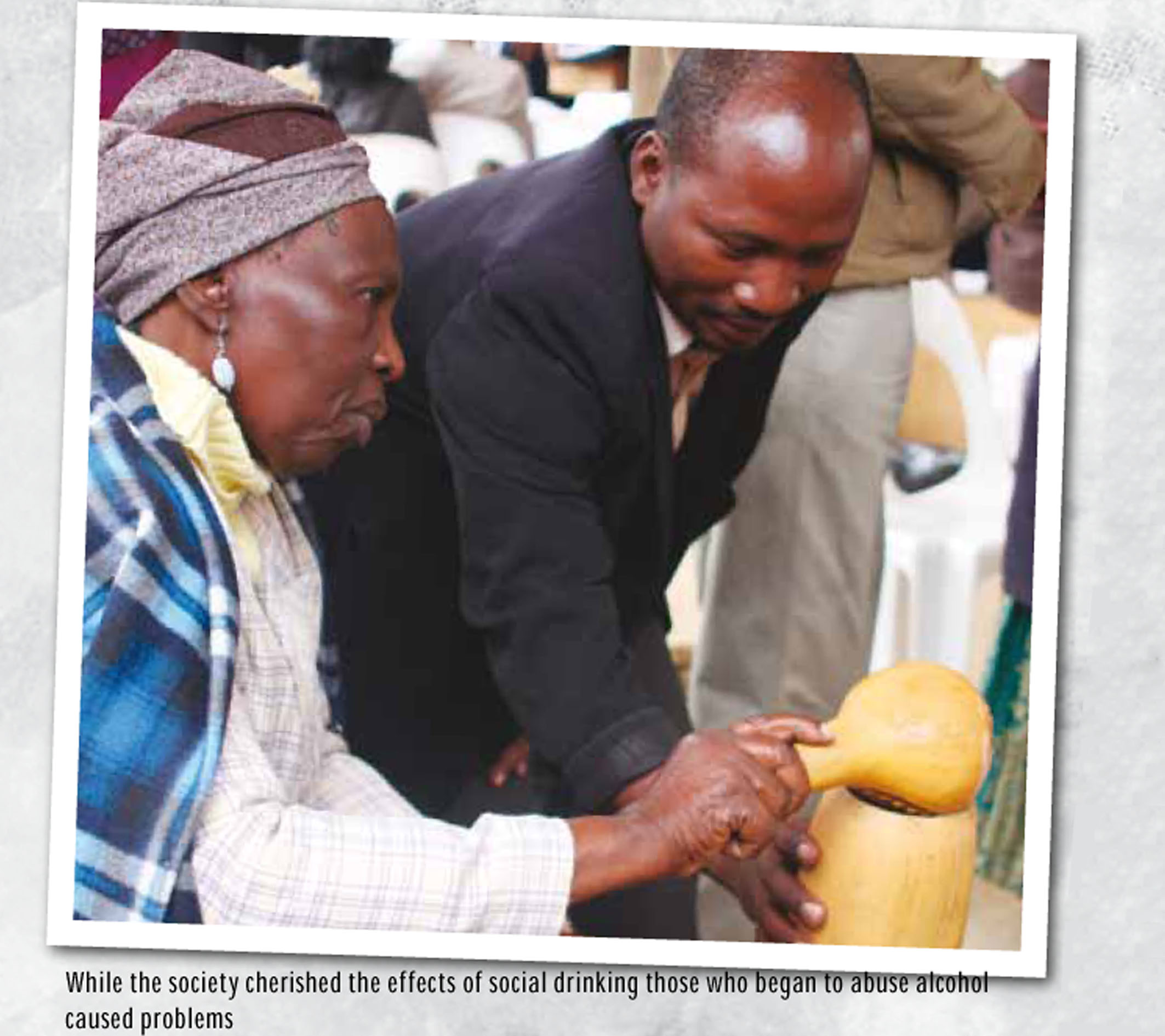
From earliest times to the present the spirit of sharing phafana ya bojalwa (calabash) in African societies has played a vital role in enhancing enjoyment and quality of life. In rural Africa gathering around phafana has always been seen as an innocent social lubricant, facilitating relaxation besides providing pleasure.
Meeting and shar ing a gourd of sorghum brews provided a unifying role in the community, a sense of identity, and belonging, where elders could express themselves cultural ly, meet and discuss political or social issues. Regrettably, all that came to be associated with illegal establishments commonly referred to as shebeens otherw ise known as sepoto in local lingo.
Despite their illegal status shebeens evolved, and became permanent fe atures of the townships’ social scene. Most of these establishments competed to attract customers by offering loud music, dancing and food.
A visit to such gatherings provided fun and engrossing experience not only for those who could afford to buy a pint but also to the penniless masses who practised an annoying trend called mogoma.
Those who relied on mogoma went to these gathering to sweet-talk other patrons into buying or sharing with them their hard earned pint.
You needed to perfect certain skills to master the art of mogoma including amongst others the ability to provide a natural sense of humour to regular and buying clients.
Kaunda Molef hi, affectionately called Matsieng in the slum of Gaborone West locations, has been to some of these spots around town.
This is where he and his colleagues while away time.
He has been to Game City depot, Senior Spot, Ko DRC and the now defunct Kwa ga Mma-35 in G-West. He has also traveled to Ginger location
in Broadhurst where he sat around a panel of wannabe political analysts’ Kwa ga Mmamongana, Ko Babirwa and Ko Limkokwing depot.
He has never traveled to Old Naledi but has overheard people talking about some popular dr inking holes such as Kwa ga Mmasphee, Ko Two Rooms and the defunct Mmaleabaneng.
Traditionally brewed alcohol has been accepted in many societies as a social drink or regarded as a social facilitator.
Simply put, it brought communities together. Even in ancient times people drank when hold ing a memorial ceremony, offering sacrifices to their gods or ancestors amongst others.
Alcoholic beverages were widely used in all segments of society as a source of inspiration, regarded as important for hospitality and provided the perfect anecdote for fatigue.
The spirit of sharing wine is also inscribed in the Christian holy book in what came to be known as the Last Supper when Jesus Christ gave i nstructions to his followers and in remembrance of Him, gave them a cup of wine and said: “this is my blood ”. Clinical psychologist at the University of Botswana, Dr Mary Onyewadume, shares the same sentiments.
Dr Onyewadume believes gathering around phafana certainly brought communities together, thus creating a strong sense of affinity.
“While the society cherished the effects of social drinking those who began to abuse alcohol caused problems. They drew attention to themselves, became highly visible and forced legislation to be enacted,” she adds.
Dr O nyewadume opines that the concept of bringing the community together was a contributing factor to vulnerability to substance abuse.
Even in churches, she says, wine is shared as a communal right but the problem is that some become susceptible to indiscipline and drink excessively. She posits that government is right to introduce strict legislation.
Dr Onyewadume, who also serves as a counseling psychologi st, says skyrocketing alcohol beverage sales, can serve as punishment.
However, he adds that there should be other means of addressing the problem such as education. “We should look into other forms like the spiritual aspect and involve churches which are vehemently against alcohol,” she opines.
Botswana, like many other countries both within Africa and elsewhere, is going through a period of rapid changes and traditional cultures are under immense pressure.
Certain values are stretched to the limit and some vulnerable groups such as women find themselves in the throes of circumstances beyond their control.
For instance, in such a highly and inversely mobile society, Dr Onyewadume posits that Batswana women have now become exceedingly cosmopolitan and extremely empowered hence most of them go to an extent of abusing their feminist values.
They think they can do what men can do. Conversely, in her country, Nigeria, a woman who could be seen drinking or smoking in public cannot have a spouse in future.
Coming back here, Botswana has seen it fit to step up efforts of curbing a larming incidents of alcohol abuse.
Policies have been formulated. Such include the National Alcohol Policy which is a framework designed after polic ymakers and the public at large expressed concern about the increasing number of alcohol related social ills.