


Volume 65 December 2026-January 2026 : Art & Culture
Demystifying Ngwale
Author : Ndingililo Gaoswediwe
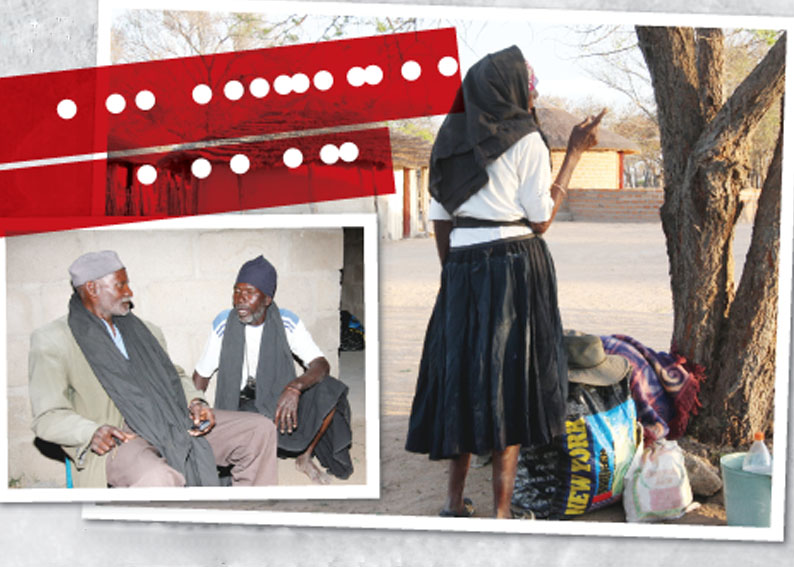
To many people, especially those who are not Bakalanga, Ngwale remains an almost abstract concept. Infact, to a good number of the uninitiated, the mere mention of Ngwale conjures up images of a creepy diety capable of both blessing and persecuting his or her subjects. And funny enough, Ngwale`s gender is never even mentioned or imagined to say the least. But there is a simpler and more subtle way to understand Ngwale, popularly believed within Bakalanga tribe to be the god of rain.
Through the Tjitshibikamatumba (putting the drums away), Bakalanga conduct a highly spiritual ceremony to thank Ngwale for a good harvest while at the same time requesting for rain. And the place, Mbalambi v illage in north easter n Botswana, is a usual rendezvous for all messengers of Ngwale among them Hosana dancers and tribal leaders. Part of the Tjitshibikamatumba process takes place on a hilltop shrine believed to be the dwelling place of Batategulu, (g randfather), veneration for Ngwale.
And given all frightening stories, myths and exaggerated experiences about the ceremony and how people fall into mysterious trances, witnessing the process is certainly not for the fa int hearted. And hair raising it was, save that tribal elder, Kgosi Fredah Mosojane, had made an assurance that religion and faith at this place reign supreme. Tjitshibikamatumba is an annual two-day ceremony held in October and highly characterized by Hosana dance, a unique and most appropriate dance performed during worship.
Akin to Christians who worship inside a temple or Mu slims in a Mosque, Bakalanga also have their special place of worship known as KuDaka. Serving as a nerve center, Kgosi Mosojane says there are branches across the Bak alanga communities commonly referred to as Tanga. One can mistake Ku Daka compound for a small cultura l village as the spacious yard is sandw iched between ploughing fields. Eleven randomly positioned roundavels completing the wood fenced compound. A stone throw northwards stands the sacred hill.
As the cool women dressed in black and white get busy preparing supper prior to the evening dance while the horizon presents a tempting view from the setting sun. Refreshing indeed, as big flames continue smothering huge pot s containing meat while every hut is choking with heaps of different foodstuffs, not to mention a beast that has also fallen victim to the ceremony. Traditiona l beer is an obvious choice for a thirst quencher.
Prior to Tjitshibikamatumba, says Kgosi Mosojane, a similar ceremony is held every July to kick start communication between Hosana worshipers and Ngwale. Njelele, Siviya, Chichi, Nzeze and Jackalas are some of the branches where such worshipping takes place prior to the sealing ceremony which attracts MaHosana (Hosana dancers) across the country and neighbouring Zimbabwe.
“Tanga attracts people across the country and the intention is to popular ize suc h ceremonies to attract audiences so as to keep the trend with upcoming generations,” she says.\ In a quest to revive such unique culture, she says the intention is to bring different stakeholders on board to help the ceremony gain momentum. women dressed in black and white get busy preparing supper prior to the evening dance while the horizon presents a tempting view from the setting sun.
Refreshing indeed as big flames continue smothering huge pot s containing meat while every hut is choking with heaps of different foodstuffs, not to mention a beast that has also fallen victim to the ceremony.
Traditiona l beer is an obvious choice for a thirst quencher. Prior to Tjitshibikamatumba, says Kgosi Mosojane, a similar ceremony is held every July to kick start communication between Hosana worshipers and Ngwale. Njelele, Siviya, Chichi, Nzeze and Jackalas are some of the branches where such worshipping takes place prior to the sealing ceremony which attracts MaHosana (Hosana dancers) across the country and neighbouring Zimbabwe.
“Tanga attracts people across the country and the intention is to popular ize suc h ceremonies to attract audiences so as to keep the trend with upcoming generations,” she says. In a quest to revive such unique culture, she says the intention is to bring different stakeholders on board to help the ceremony gain momentum.
In its heydays, says Kgosi Mosojane, the ceremony commanded respect and there were permanent inhabitants of the compound. However, due to commitments and scarcity of funds, no one currently occupies the compound. She also adds that t he ceremony used to last for a week but the days have been cut to two because today`s generations are not fit to take the seven-day challenge due to factors such as ill health and other engagements.
Normally very old people do the performance especially those who have qualified as messengers to Ngwale and have, at one point in time, gone through the rites of passage.
“As in any other religion, we have our higher priest referred to as Tate Vumbu and he directs all the prayers and proceedings,” she says.
As a patch of feint clouds weakens the spring sun rays, Vumbu calls MaHosana to get ready for the afternoon da nce. In a solemn act, the women and men dressed in black skirts and white tops, gather in an open arena behind the compound. Interestingly, everyone who exits the compound for the arena leaves shoes by the gate. Men sit on the ground leaning against the wooden fence while their eyes are glued to the stage where MaHosana and Malombe (those who dance for fun) show their killer moves.
Conversely, women form an arch while clapping and singing K alanga and Ndebele songs with messages centered on asking for rain. A distant sound from three d rums adds finesse to the acts while women sept uagenar ians and octogenarians rule the stage.
“It is not anybody who can do the drums` rhythms,” quips Kgosi Mosojane as she claps her hands while strolling around the arch encouraging participants to be livelier. As the dance continues, some roll over on the ground, a sign of communication between them and the god. One elder chips in and explains,
“Cameras with flash lights are prohibited in the arena because the light symbolizes lightning, thus we would be requesting for a stormy weather.” Sixty –five year old Jokoniah Mokokomane says the ceremony dates back to the 19th Century during which Ntogwa settled at the compou nd where Baka langa today gather to worship.
He says Ntogwa was a great worshipper who was believed to possess powers to communicate with the rain making god because after per forming his dances, most of the time it rained. Ntogwa introduced the first Tanga before relocating to Ramokgwebana. “This is why today we still gather here,” stresses Mokokomane.
Hosanna dancers always dress in black and white and Mokokomane explains that the black colour gives emphasis to the beauty of inhabitants of the Dark Continent, noting that white symbolises purity. Hosana da ncers always accessorize their outfits with beaded hair bands and necklaces.