


Volume 65 December 2026-January 2026 : Social
Taxi Fare that Never Was
Author : Bakang Segokgo
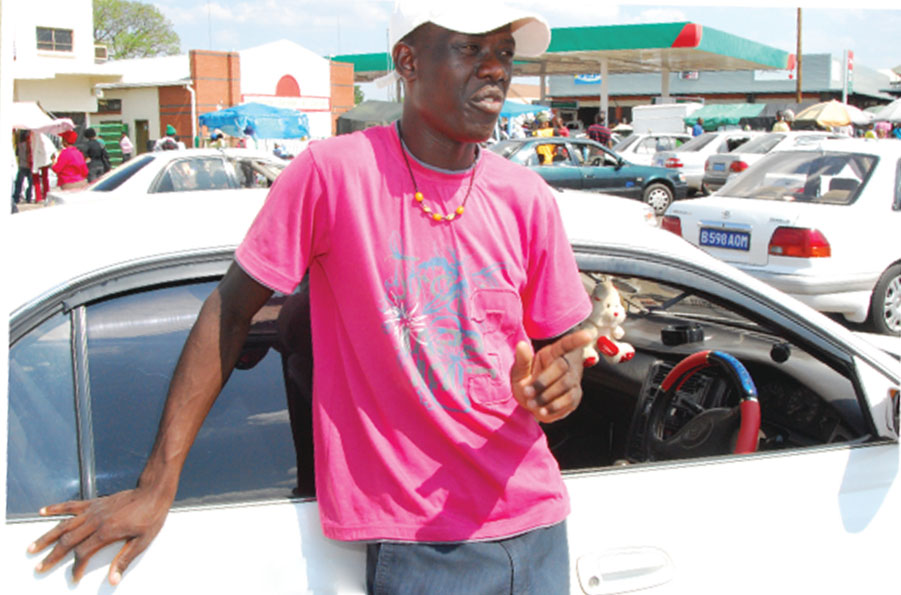
It is a Friday night and as usual this taxi operator is contentedly working late, commuters to their respective places around Gaborone. He happy that at the end of the day he will have something to show for his efforts.
As he hustles through street after street and theheavily populated Gaborone West residential area, a female passenger suddenly asks him to stop and drop him at a certain house. A strikingly tall woman, seemingly in her twenties, alights the yellow taxi and turns around as if to hand the driver his money. Instead, she quickly implores him to wait while she dashes into the house to collect it.
The taxi man is not happy but obliges. After all money is the only reason he is in this business, so wait he will. After the young woman had been gone for what seemed like 20 minutes he decides to check what could be keeping her for so long. He knocks on the front door.
In the house the occupants surprisingly deny any knowledge of the woman but nevertheless allow the taxi
man to search around so that he can dispel any lingering doubts. The young woman is nowhere to be
seen. In the mind of the taxi, it is one of those fateful days when lose becomes real. As in previous such encounters, he swearingly gives up. Once again he has been conned.
The yellow taxi man is not the only victim of such cheating by passengers. Infact, this is one out of many such nasty experiences that taxi operators have to time and again contend with.
They end up fooled by the very people they seek to help. This begs the question why would passengers, particularly women who are known to be very timid to such an aextent that one cannot fathom them committing such crimes, want to defraud taxi operators. Is it because they truly do not have money or they are merely habitual fraudsters?
There are many various instances in which taxi operators were cheated out of their hard earned cash. Some such stories are so funny that it is hard to believe they are true. One such incident which sounds like a fairy tale goes thus: a male taxi passenger asks to be dropped next to a graveyard in Gaborone. When the taximan asks him to pay, he brazenly asks: “A le dipoko di a duela?” Thus, “do ghosts also pay?”
The poor taxi man got the shock of his life and frantically sped off thinking that he had actually given a ghost a ride. It was in fact just a trick by a passenger who want to avoid paying. In other instances, a passenger may look stressed and desparate so much that the taxi operator may be expected to deal with such a situation.
Olefile Rankowa, 24, is one of the taxi operators who have had to deal with similar misfortunes from time to time as he transports people around the Gaborone. “The customer is always right and you just have to put him/her first”. He says Christmas holidays are always the worst because this is when such crimes reach their pick.
Shaking his head but smiling, Rankowa shares one nasty experience in which he was fooled by a seemingly innocent woman. He had taken the woman on a ‘special fare` to Game City shopping centre. On arrival, the woman requested that she be allowed to go and withdraw money from a nearby bank. Unfortunately, according to the taxi man, there was an uncomfortably long queue at the bank. In his imagination, he could not wait for that.
“I had to give up and go without the P30 I had expected,” laments Rankowa. Yet another Gaborone-based taxi operator, while appealing to women to give up such bad habits, says he once had an encounter with a woman who was visiting her boyfriend from Selebi Phikwe in the Central district.
Apparently the boyriend failed to turn up while the woman waited without any clue about her next move. Any help that would come her was all she needed. “I had to help her with transport, as well as organise accommodation for her,” says the taxi man who preferred anonymity. Worse still, the miserable woman didn`t even have enough money; “just imagine how much I lost on that day alone.”
The taxi operator also accuses male clients of spending too much on hiring taxis, saying they have a tendency of booking a taxi to take them to clubs around town. And “this can be expensive, and when it is time to pay they cry foul,” he says.
The risky nature of the taxi industry is not peculiar to Botswana. For instance, Simon Mkhize, a taxi operator in Zimbabwe, says one day he picked up a wheelchair-bound elderly woman who wanted to go to Gold Hill in Shaftesbury.
On arrival he kindly helped the old lady and her wheel chair off the taxi. “I pushed her down to her house where there was no one to pay for her fare as she had expected,” says Simon who had to transport the old woman back to where he had picked her up. In cases like these, it is not hard to see how much time and money taxi drivers can actually spend on just one client.
Richard says, while transporting one young girl from Witherspoons to Gillingham, the girl stopped him several times on the way so that she could relieve herself because she was sick. “Eventually she passed out and I took her to the police station who called an ambulance,” says the taxi man.
Taxi drivers go through a lot on a daily basis to the extent that some of them play the role of psychologists or social counsellors. Twenty-five year old Bafana Macheng, says often passengers confide in taxi operators. He says: “I remember one day as I was dropping one woman in Block 5, there was emptiness in her and immediately she told me how she had just been divorced with three kids.” Macheng says he comforted her and that made a great difference.
For taxi operators being cheated at night or at any time has become part of their business and they have learnt to live with it. However, one of the operators says he has decided to be smart by collecting the money before the journey starts to avoid people playing silly pranks on him or arguments.