


Volume 51 Issue 2 - February 2013 : Others
Mmamantswe: Botswana’s next treasure trove
Author : Kwapeng Modikwe
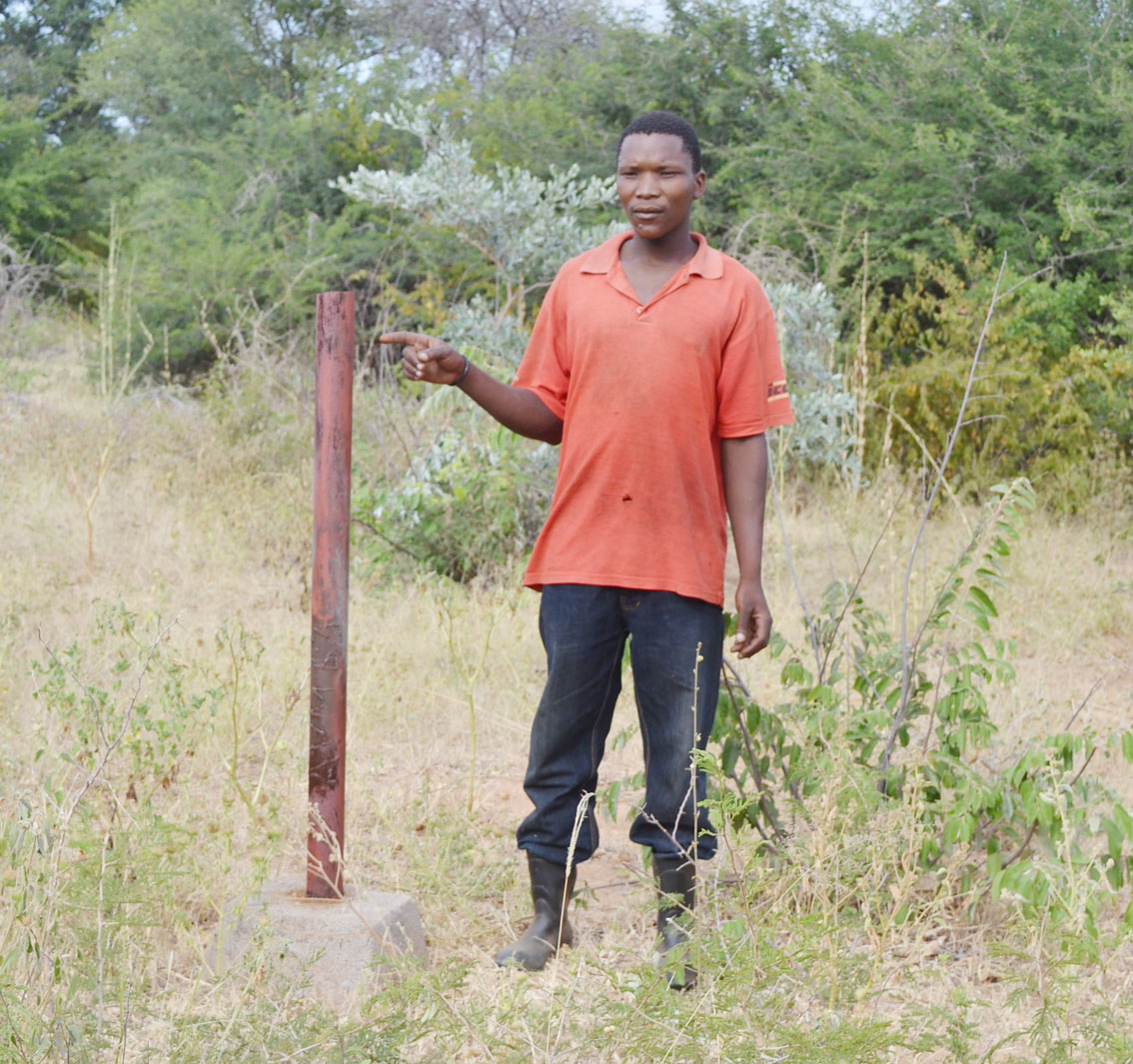
Until recently, Mmamantswe area had always been a quiet and little known place except for its craggy Mmamantswe Hill that boasts lush vegetation. It is in eastern Kgatleng and one would tell you that the old road from Mochudi to the area is nothing less than a bumpy, bushy, and painful affair, particularly for first time visitors.
At the Dikeletsane Cattle Post turn-off, the ordeal intensifies as the road joins a narrow and dusty track which penetrates the thick scrubs of motsotsojane, mogwane, moretlwa, and moselesele shrubs.
This section is seldom used and therefore difficult to traverse. The possibilities of losing a vehicle mirror or getting lost are always plenty, particularly if one happened to be using the road for the first time. It is often by the help of herd boys in the area that strangers are able to make it through.
However, of late the place has suddenly started attracting business news hounds from Commerce Park.
The reason is not hard to find though because a coal mining project has recently sprung up in the area. Mmamantswe Coal Project is the latest desert treasures Botswana has unearthed.
With the country already boasting of, among others, diamond mines at Jwaneng, Orapa, and Letlhakane; copper and nickel in Selebi Phikwe; and a coal mine at Morupule and Mmamabula, this latest discovery has undoubtedly enhanced the country`s status in the mining arena worldwide.
Aviva Corporation, the company that mines the Mmamantswe coal deposits, hopes to produce large quantities of coal from the Kgatleng District, an area no one knew or let alone expected it had so much wealth under its belly.
Although the actual mining has still not taken place, the area is already beginning to gain popularity both locally and internationally.
The project is expected to be a blessing for the local community as they claim compensation for the loss of utilisation of natural resources in the event the whole area is to be reserved for mining. During good years the area is rich in thatching grass, timber, and wild fruits.
The headman of the nearby Olifant`s Drift village, Kgwanyape Sekobowane, which has grown to become a major centre in the area, says the residents cannot wait to benefit big-time from the mine once it becomes fully operational.
Kgosi Sekobowane says the development of the Mmamantswe mine will indeed improve their lives by offering his people jobs. He hopes that his village will soon become a township, something that has never been thought of before.
However, the not-so-certain Jautse is not convinced and has thus reserved a room for disappointment. This is because, despite the hype of the preliminary consultative meetings conducted by mine authorities in the area about the coming project, still nothing has materialised.
She says things began to slow down after the leadership in Mochudi demanded that, for a coal mining to take place in the district, mine owners should be prepared to pay royalties to Bakgatla. The local communities should be employed in large numbers, although doubters say, with such a small population, definitely Mmmantswe cannot supply the mine with enough personnel.
Reports show that beneath the soft sands of Mmamantswe, rests 1.3 billion tonnes of coal deposits that will last for at least 28 years. The coal deposits are easily exploitable through open cast mining. The output including coal and power will be exported to both local and international markets.
The depth of the mine is to be between 40 and 100 metres, and it is expected that the project will produce 10 million tonnes of coal per a year, which means that within its life span, 280 million tonnes of coal will have been produced.
The Mmamantswe coal is expected to yield predominantly thermal coal with low phosphorus metallurgical coal, says Comfort Molosiwa, the country project manager. He adds that production is expected between 2015 and 2016.
Efforts are being made to secure external buyers, particularly South Africa`s Eskom. Project officials say the mine has potential to employ 500 people when in full operation, and this figure will have a positive trickledown effect in alleviating poverty.
Some residents have expressed fear that pollution from the mine will not be monitored and also that the project might affect livestock, vegetation, and ground water. However, the environmental impact assessment statement allays such fears.
Developments that come with the mining project are many and they include housing, roads, and water development, among others. A tarred road will stretch from Mmamantswe to link with the A1 Road, probably near Isang rail siding where there is a power station. The power station will supply power to Mmamantswe.
Rail and road construction will definitely go along with the construction of bridges across the Notwane River which is yet another unexpected advantage for the farming community across the river. Currently the residents depend on bridges in Mochudi and the one at Lekgalong which are far away from them.
While some people may be displaced, the development of Mmamantswe will also boost the economic activity of the farming community surrounding Mmamantswe as they stand to benefit especially from roads and electricity.
A decision is to be made in due course to determine who will be asked to relocate to another place. Molosiwa says since the mine will require an area of eight by six kilometres, it may not be necessary to displace everybody in the area.
He says they are still toying with the idea of seeing whether cattle and the mine cannot exist together side by side. Mmamantswe itself has a small population of cattle. According to figures provided by the Department of Veterinary Services in Mochudi, the area has only 836 cattle.
Other cattlepost areas in the periphery have a total of 3 758 cattle with Dikeletsane cattlepost accounting for a larger number. The least is Bogwete cattle post with only 400. However, livestock production and distribution is slowly shifting towards Mmamantswe because grazing in other areas north of it is covered by the poisonous mogau plant.
Molosiwa says construction of the railway line and associated infrastructure will need US$15 billion, and the line will stretch from Mmamantswe to join the planned Transkgalagadi Rail north of Rasesa.
Mmamantswe will depend on underground water, and already 20 boreholes have been drilled around Masama Livestock Centre north of Artesia. In addition, five other boreholes have been drilled at Mmamantswe itself.
John Pone, a member of the Mmamantswe borehole syndicate says although they will be directly affected by the coal mine as a group, they have not yet been consulted. He says as a syndicate which will be affected directly by the development of the mine in their area, they should have long been consulted.
“We should have been included in the 2011 visits of the mine authorities as they toured some parts of the district”, he says. Although some boreholes have already been drilled in the area, they have never come face-to-face with senior mine officials, he says adding that, some of the drilling took place very close to their kraals.
“You would see drilling taking place behind your kraal and when you go there to find out, you would hear those in-charge of the drilling saying to you that they are just employees and they do not have answers to your questions,” he complains.
One borehole, he says, has been drilled next to “our borehole and during the drilling, water from our borehole which had been colourless all along, suddenly became darkish.”
“We attributed that sudden change of colour to the drilling taking place because it appears they had drilled past our borehole`s depth,” says Pone. The darkish colour with which they are unfamiliar did not last long as the water reverted to its colourless status afterward.
They have been staying at Mmamantswe since 1957 when their borehole was sunk. His wish is that none of them should leave the place. He says Orapa Mine is surrounded by cattleposts and the same should be the case with Mmamantswe.
However, he says they welcome the development of the mine even if it means displacing some of them because national interest should supersede individual interests. ENDS