


Volume 65 December 2026-January 2026 : Feature
Elephants drive farmers to despair
Author : Moshe Galeragwe
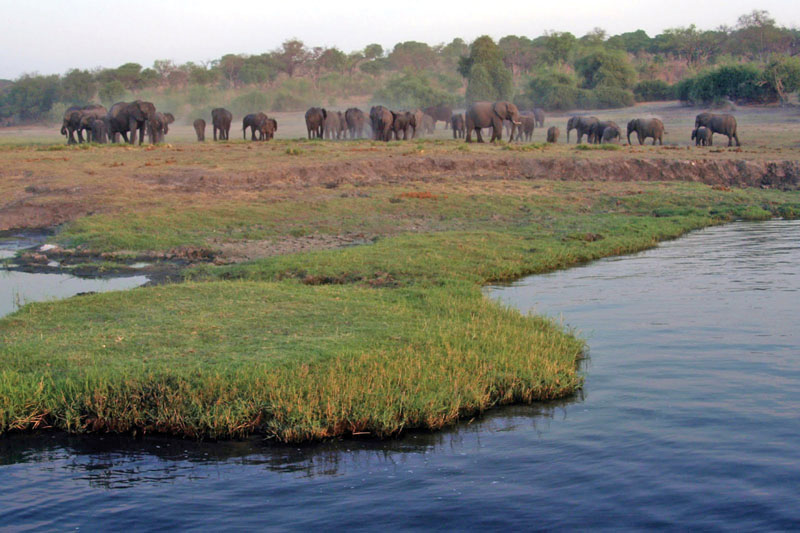
Batswana are so attached to their traditional practice of rearing livestock and cultivating crops to the extent they do so even where there is little hope for success.
Consequently, even in places such as the Chobe District where wild animals and farmers compete for the little land available, subsistence farming still takes place in the midst of marauding elephants and lions.
Then there is the rise in the tourism sector plus an ever-increasing wildlife population which are turning traditional agriculture into a fruitless endeavour so much that crop cultivators in Lesoma have stopped cultivating their land.
They long lost their fight against the ever-increasing elephant population. For three years now, they have not ploughed their fields.
The jumbos are now in charge after they destroyed the electric perimeter fence that protected the farmer`s fields. An elderly Lesoma resident, Moqakhwe Matoteng, relates how elephants have robbed him of his traditional lifestyle which had for many years provided him with food.
Aged 92 years, Matoteng who originally hails from Gumare says although he has lived all his life side by side with wild animals peacefully, the current situation worries him a lot.
“We have for long engaged in crop production, producing enough to feed our families and sell surplus harvest, now we have folded our arms as elephants are now in charge.”
He settled in Lesoma in 1983 when it was easy to control the elephants as their numbers were still low.
“I am very much aware that we are living in an area where tourism is at its boom, and there is nothing that we can do, as it provides for us and the country`s economy. In the past elephants were not much of a trouble, we were able to harvest as they were not so dominant,” he says. He suspects the catastrophe that has befallen him and his neigbours is the work of humans.
“I suspect that some tourism developments along the river banks, such as lodges have somehow blocked some of the migratory routes for elephants driving them into our land,” but adds that wildlife officials are no longer as helpful as they used to be.
“They never attend to our reports on time, and they blame the delay to shortage of manpower and vehicles,” he laments. He also suspects poaching could also be a contributing factor as elephants are forced to flee the wilderness and now competing for space with human beings
So widespread is the problem of destructive elephants that Matoteng shot and killed three elephants which were destroying his crops in the last season alone.
Cultivating fields has become a risky undertaking as farmers are constantly in danger of being trampled by these dangerous animals, especially at night when they are forced to chase them away in the dark.
It is not only Matoteng who is worried by the elephants.
An equally worried community erected a solar powered electric perimeter fence with the help of KALEPA Community Trust to keep the elephants away from the village. However, thieves stole the solar panels.
Without electricity the fence could no longer keep the elephants at bay. They trampled over it and headed for the fields.
The fence was later connected to the power grid but still the elephants came, says chairperson of the Village Development Committee, Peggy Mogamisi.
The farmers now have no choice but to abandon ploughing as it is a waste of time and government funds which are disbursed through ISPAAD (Integrated Support Programme for Arable Agriculture Development) programme.
“I am aware that crop production is a key part of our culture and also boosts food security but faced with merciless creatures like elephants we had no choice but to abandon our fields and stay home.
The situation had also worsened human-wildlife conflict,” she says. A prominent farmer in the area, Zhabe Dube, also says a solution that will encourage farming while at the same time nurturing tourism is needed.
“Government must come up with an amicable solution to the problem as we want to continue with ploughing while on the other hand push for the growth of tourism,” she suggests.
“We are now in a dilemma as we are forced to kill the same wild animals that provide for us. We have a challenge as the little land that we occupy must provide for livestock, wild animals, tourism development projects, human occupation and ploughing,” says Dube. Ends