


Volume 65 December 2026-January 2026 : Feature
MEPHATO YA MALOBA...Bagammagwato's pride
Author : Baleseng Batlotleng
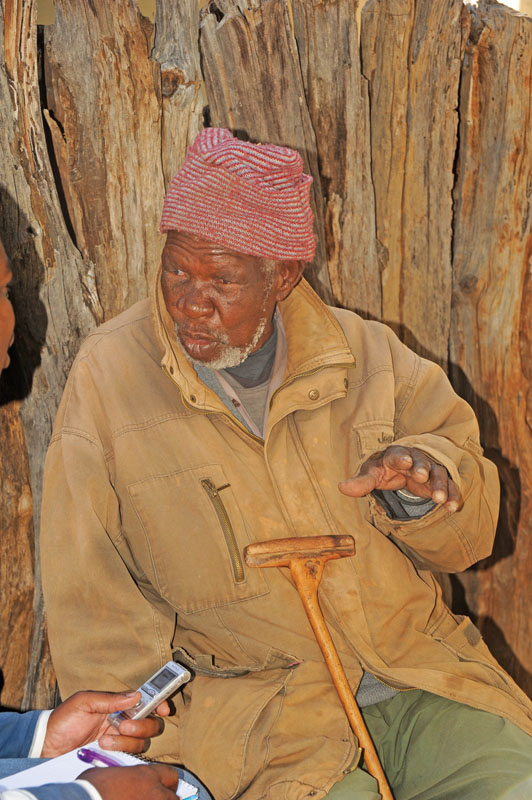
I travelled to Serowe main Kgotla, just at the foot of the historical Thataganyane hill adjacent the royal cemetery where the nation`s great statesmen are laid to rest. By the stroke of luck, I stumbled upon 93-year old Keorapetse Matshabe.
The nanogerian, despite a seemingly failing eye-sight and unlike his contemporaries who walk at a pace of an ageing snail, maintains a spring walk and is full of life. As I double my steps to catch up with him, I immediately notice the old man is plainly but not ill clad.
The thick hoar of dust which had accumulated on his shoes and heavy coat was an indication that he had endured a long journey from
Makolo ward, a place where he was born in the summer of 1920. Before we could even exchange pleasantries the old man had this to say “tota monna ware o ngwana waga mang? Nna kana ke lelekantwa…”
Curiosity drove me to steal a few minutes from his time to explain his strange insignia. He was just heading to the main Kgotla to preside over a civil matter.
As we take our seats, Matshabe occasionally makes reference to these Malekantwa clan.
At the age of 15, Matshabe went through the tribal initiation ritual or bogwera.
The youth who were called together formed an age group regiment or Mophato in the local lingo. It was during the reign of Kgosi Tshekedi, a stern tribesman who believed in strong tribal affinity.
“Re ne re godile re rutilwe gore morafe o tshwanetse wa tshwaragana. Kgosi Tshekedi o ne a bolotsa mophato wa rona wa Malekantwa mme re eteletswe pele ke monngarona Seretse Khama ka e ne e le molekane wame mme e le ngwana wa bogosi,” he adds.
Social organisation within the Ngwato tribe was the order of the day even at the height of colonial rule. Matshabe explains that even influential Dikgosi tried to achieve their own independence by creating clans of mephato within their communities.
The power of Kgosi derived largely from how he kept his mephato together. Khama III, affectionately known as Khama the Great, perhaps the greatest statesman an ordinary mongwato man know of, was a charismatic leader, to say the least.
He is probably best remembered for having made crucial decisions during his tenure as kgosi.
First, although he abolished the bogwera ceremony itself, Khama retained the mephato regiments as a source of free labour to build missionary schools and churches.
The scope of a mephato`s work would later expand considerably under the rule of Khama`s son, Tshekedi, into the building of primary schools, grain silos, water reticulation systems, and even a college named Moeng located on the outskirts of Serowe, which under Khama`s reign had become the Bamangwato capital.
“Nna dilo tse ga re sa tlhole re di bona jaanong.
Re ne re rongwa ke Kgosi Tshekedi re sa duelwe re dira ka bo tswa pelo ka go re go ne go sologela morafe molemo,” explains Matshabe.
Our conversation takes a high turn as Matshabe`s older cousin, Selemeng Atlarelang, joins us.
“Nna rra ke Lekgasa. Re ne re dirisana le Malekantwa e le bo monnaarona. Re thusana re dira ditiro tsa morafe re le bo mme re bereka le bo rre go sena dikgwetlho dipe tse di ntsi jaaka re bona mo malatsing ano,” she explains.
Atlarelang`s Makgasa regiment has been credited amongst others for the construction of the Serowe airstrip which is also known as Lebala la Makgasa.
They also assisted Malekantwa regiment in the construction of the historic Moeng College. Those who belong to the younger generations also share the same sentiments that the works of age regiments were visible in society.
Mabedi Selekanyo of Goorasekga ward belongs to the Malwelamotse regiment led by President Lt Gen. Seretse Khama Ian Khama. “Ke gakologelwa Mathogela, Maphatshwa, Maletamotse, Malekantwa, Mafetsakgang, Mafolosa le Maemelwa go ya hela ka go tlhomagana ga tsone go tsweng malobeng,” he says.
I stepped up into Bangwato Regent Sediegeng Kgamane`s office and immediately was struck by the unwavering hospitality. I extend my hand to greet Phuti and quickly notice that his manner changes, and his face assume a grim shape largely owing to my unannounced visit.
After a brief introduction of my reason for my impromptu visit, Kgosi Kgamane takes a deep sigh of relief and says, “Since the inactiveness of mephato the tribe has been very uncooperative.
Gompieno jaana ke bone maloba melelo e kuelwa batho ba innetse hela go fitlhela go bitswa bana hela ba sekolo sa Swaneng Hill. Mowa wa boipelego oo neng o rotloediwa ke tiriso ya mephato o ile ko tlase.
Apparently after independence and after the introduction of certain legislation, human rights issues came into place and certain laws came into effect,” adds Kgosi Kgamane.
Kgosi explains that during the reign of Tshekedi the Makgasa regiment was sent on a hunting expedition of a pride of lions which terrorized Gammangwato region.
Kgosi Kgamane belongs to the Maemelwa regiment which is led by Kgosi Tshekedi`s son, Modiri Khama. Kgosi Kgamane`s ambition is to see mephato revived despite socio-economic challenges.
“Currently the leader of the Malwelamotse regiment leader, Seretse Khama Ian Khama o biditse pitso ya gore mephato e ya rona e emele ditlhabololo tsa dikgotla tse di tona ebong Maaloso, Maaloso-a-ngwana, Basimane le Ditimamodimo,” says Kgosi.
Kgosi Khama III belonged to, and led the Mafolosa regiment which was grouped during Kgosi Sekgoma Kgari`s reign.
The Ngwato had defeated the Bakaa people who were incorporated into the Ngwato people. In recognition of the victory Khama`s regiment was called the “Mafolosa” which literary means “the bringers down-of the Bakaa people”.
Other notable Bangwato tribesmen are the late folklore segaba virtuoso, Ratsie Setlhako.
A great admirer of mephato as evidenced in all his songs. Ratsie is believed to have belonged to the Masokola regiment.
A curator at the Khama III Memorial Museum, Scobie Lekhutile, explains that Bagammangwato had a reputation of building a strong untrained army to thwart any threat from external forces.
“Hence we have names of certain regiments with war metaphors like Marema-ka-tshaka, Maopathebe, Malekantwa, Malwelamotse and Maletamotse. We also built strong diplomatic ties with certain merafe and thus we had mephato like Mautlwakgang, Maratakgosi, and Mafetsakgang amongst others,” he says.
According to Lekhutile, regiment groupings were converted to labour forces to address community needs. When livestock was faced with severe drought conditions, it was the duty of the mephato to dig sip wells and feed cattle.
“Dikgomo di kile tsa kgalelwa mo ga Mmangwato mme ga bitswa bangwe go ya go epa masoko ko nokeng gore metsi a itsheke Dikgomo dinwe, mophato o ne wa tloga wa bitswa Masokola,” he says.
However, Lekhutile says allegations of wrongdoing were reported as regiments were reportedly looting at fields and cattleposts. Notwithstanding, he heaps praises on those who are now able to identify with certain projects they undertook at the expense of community service.
“During mephato`s existence there was no need for other sub-cultures like ma-rasta, mapantsula, ma-cat le ma-rock that we hear of these days. Now that we lack all the structures to socialise people, we end up with many social ills, we have removed the institution of mephato and left a vaccum,” he reckons.
It was the invention of mephato that created powerful nations across Africa.
At the height of his rule infamous Zulu leader, Shaka Zulu, organised various age grades into regiments and quartered them in special military kraals, with regiments having their own distinctive names and insignia.
The Nguni tribe also had established a system of initiation ceremonies. People born in the same period were initiated into age regiments to promote unity among them and to provide people to serve the Kgosi.
As the competition for resources became intense Nguni tribe had to turn their regiments into military forces to watch fields, expand grazing areas and check on rivals.
In Botswana other merafe also had mephato as in Malatolwa, Maisantwa and Matsaakgang for the Ngwaketsi tribe. Bokhutlo