


Volume 51 Issue 9 -- September 2013 : Feature
How Etsha became 13
Author : Baleseng Batlotleng
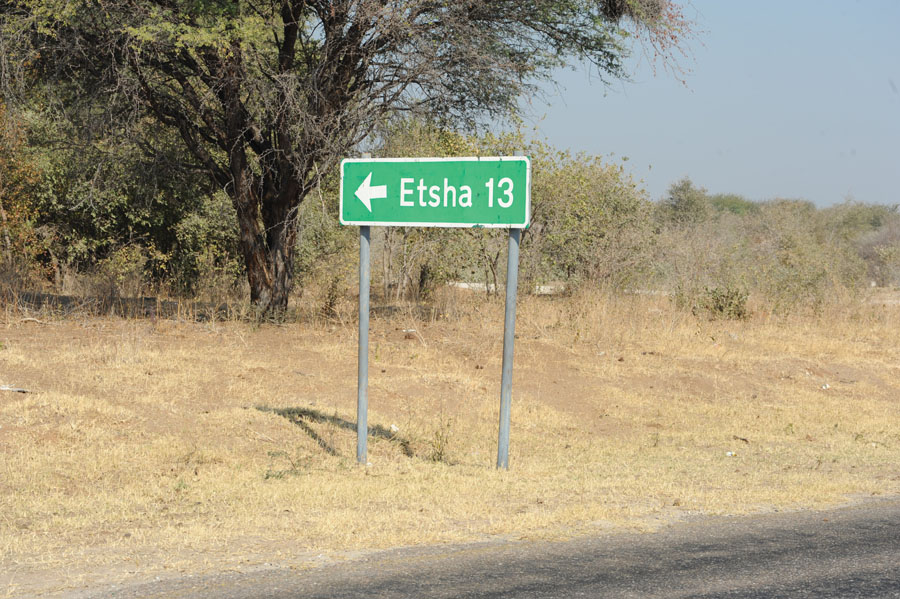
In rural Okavango just between the villages of Gumare and Sepopa lies a stretch of 13 communities sharing a common background. Perhaps it is worth noting that part of this background is that at least 80 per cent of these people speak one common language, Sembukushu.
However, one thing that caught my attention is why all these villages bear a single common name, Etsha.
According to oral traditions, the name is a Sesarwa term for water. Linguistically the suffix “-tshaa” can well be traced to several Sesarwa names which all refer to water in a number of places in Botswana with a strong San influence in their cultures - Damtshaa, Tsokatshaa, Beetsha - amongst others.
Now here lies a people living along the western side of the Okavango Delta. In what some have since termed a successful resettlement scheme, between December 1967 and September 1969 some 4 000 refugees from Angola mainly members of the Hambukushu tribe entered northwestern Botswana at the small village of Mohembo.
These people fled their native home Angola because of the fierce civil war that ravaged the small Portuguese colony.
They filtered through the Okavango River until they were assimilated into Batawana.
At the Etsha 6 “Headquarters” Kgotla, Kgosi Boitshepo Forosi had this to explain, “Etsha o kgaogantswe jaana. Etsha 4 go ema ka 9 ke dikgotlana tsa Etsha 6 ene yo re mo go ene yo.Tota Kgotla e tona ke ene Etsha 6 e e bitswang Mabudutsa. Etsha 7 ke Botshabelo, Etsha 8 ke Kokarakenge, Etsha 9 ke Madubana, Etsha 5 ke Kavura fa Etsha 4 ene Mbambangandu”.
From Etsha 10 all the way to 12 are small settlements and cattleposts like Xanxana which is just on the fringes of the Gumare/Shakawe Road.
On closer inspection, it is easy to note that all the communities here were named after influential Hambukushu tribesmen who were instrumental in the resettlement of these clans in Botswana.
As the kgosi explains it was worth recognising the job that these men did. Resettling in a conflict torn continent like Africa is a rare phenomenon.
Therefore, it was of great importance to recognise them.
Though the Hambukushu are said to have first settled at Etsha 1, overall Etsha 6 seems to be a vibrant community which Kgosi Forosi refers to as the headquarters.
Around the kgotla is the bus rank and a number of shops that seemingly enjoy a steady trickle of customers.
There is also some degree of an organised village here compared to Etsha 13 where a hundred of tents pitched still give a look of a war displaced refugee camp, or a town rising from ashes.
The group that found a second home in Botswana comes from different tribal groupings, the Hambukushu, Mokwangadi, Moyemba, Moxereku and Kwenga.
Given Bayei and some Basarwa communities were already inhabitants of the Okavango Delta pan handle the Etsha communities have a mix of Mbukushu and Seyei origins.
A 51 year-old Etsha 13 resident, Dimbimbithi Moyabango, was a child when his parents fled to Botswana. He was born in Angola. Moyabango has sad memories of how Etsha 13 came to be his home but is thankful that he is still alive.
Moyabango who has never seen the four corners of a classroom stays alone in a rundown one-roomed reed hut. Behind his hut is a very large drum signifying his strong principles of Mbukushu traditions.
I was also struck by his ability to keep up a fluent conversation in Setswana for the entire period I spent at his home despite never been taught Setswana as a young man.
The Hambukushu are famed for bringing basket weaving artistry to the Okavango. Their basket creations have won accolades internationally.
Their main source of subsistence is the river from which they fish and gather water roots and other wild fruits such as mokutjomu. Ends