


Volume 65 December 2026-January 2026 : Business
Shorobe: Creating a meaningful barrier between livestock and predators
Author : Baleseng Batlotleng
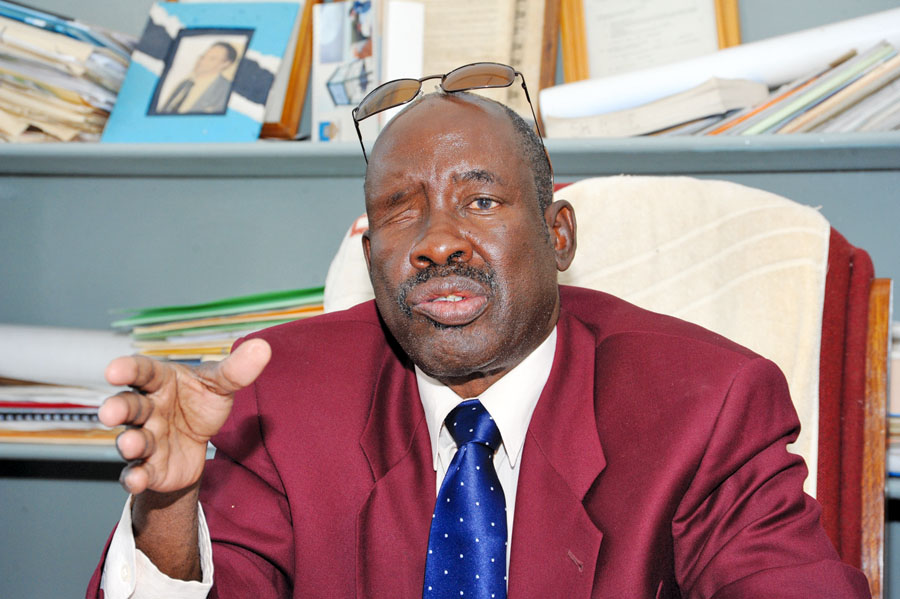
When John Mcnutt arrived in Botswana in the summer of 1989, his dream was to complete his doctorate and return to Seattle (USA) to join his family.
he natural choice of study for the then youthful postgraduate student from the University of California was the bush somewhere near Moremi Game Reserve.
Mcnutt would then spend more than half a century here studying animal behavior specialising in the African wild dog.
It was the large carnivore species that he stumbled upon in his research that Mcnutt discovered the intense conflict between them and livestock.
“Conflict between the two has been occurring since animals were first domesticated. Too often the solution to such conflict is the eradication of the perpetrator usually a predator,” notes Mcnutt in an interview.
Mcnutt led a team of dedicated researchers who had an undying passion set to up one of the longest running conservation research projects in Africa called the Botswana Predator Conservation Trust (BPCT) to create a meaningful boundary between livestock and predators.
Initially founded as the Botswana Wild Dog Research Project in 1989, the trust today covers all the large carnivore species in Botswana namely lions, cheetahs, leopards, African wild dog and spotted hyenas.
As part of the project in January 2010 the trust began an outreach programme to the Shorobe community, located just south of the veterinary cordon fence where many of the animals venture south of the fence.
“We developed what we call the Shorobe Livestock insurance initiative as part of the project where we apply what we know about the ranging and distribution of large carnivores into farming areas over boundaries and fences. We are basically restructuring the government compensation scheme which is a good idea in principle,” explains Mcnutt.
A premium structure affordable to farmers was launched with payments fundamentally based on assessed risks which are related to husbandry practices. The practices include livestock herding, strong kraal construction, trained guard animals and disease management and control programmes. In principle, the more intensive husbandry, the lower the risk of loss and the lower the cost of insurance.
After several meetings with the Shorobe kgosi, community leaders and the wildlife department, the team visited at least 73 cattle-posts in the area to introduce the programme and discuss issues that posed challenges for their livestock production.
The Shorobe area covers cattle-posts and settlements such as Toroga, Mochaba, Shokomoka, Morutsha, Gabamochaba and Daunara amongst others.
Among those singing praises for the insurance programme, which was also designed to encourage farmers to employ livestock protection techniques to reduce the conflict is Kgosi Molatedi Dingalo of Shorobe.
“Nnyaa mme ke lenaneo fela le balemi barui ba kgaolo ya rona ba le amogetseng ka pelo tse ditshweu. Ke lemogile gore ga se gore gona le dipoele dipe tse ba di Dirang kgang fela ke go tisa maikarabelo mo baruing gore ba tlhokomele leruo la bone kgatlhanong le dibatana tse di re a pesitseng kobo ka letshoba mo kgaolong e ya rona,” adds Kgosi Dingalo.
Kgosi Dingalo was compensated following a fatal attack by a cheetah on his calf. “dinkwe le makanyane aa tlhagela mme a tlhorontshe dinku le dipudi tsa meraka ee gaufi. Kgakololo fela gongwe ke gore a puso e nontshe terata ya Tlhako le molomo e tsenngwe Motlakase go fokotsa bothata jo.
Mme go lebega boikuelo jo bo itaa sefolletse ka gore re tlhaloseditswe fa go le turu ka ditlou di ka tswelela ka go diga teraka,” says Kgosi Dingalo lamenting that they have long asked for an electric fence separating wild animals from livestock and their request has not been acceded to with government explaining that it will be expensive to maintain the fence as elephants will keep destroying it.
A local committee has been appointed and works together with the BPCT team and officials from the wildlife department to help farmers improve their husbandry practices, collect payments from members, assess claims, facilitate the claims process and pay out for livestock loss.
Onalethata Nkape, liaison officer for the Shorobe initiative, had this to say “tlhokomelo ya leruo ke yone e farologanyang dituelo. Tota mo lenaneong le kgomo ke kgomo hela ga gona gore ke ya sebopego sefe. Bontsi ja barui ba kgaolo ya rona ke batho ba kgomo ya tswana.
Batho ba kgaolo ya rona ba amogetse lenaneo le ka ba kile ba lela thata ka phimolo dikeledi e baneng ba ntse ba e bona gotwe e ko tlase mme ebile fa gongwe e tswa ko morago, selo se ba tlhalositseng fa se ba kgoba marapo”.
This means that the breed of the cattle is not used to determine compensation instead factors such as taking care of livestock are considered.
Nkape also explains that farmers are quite happy with the insurance programme since they had been complaining about low compensation from government, which is often late.
ABOUR THE BPCT
BPCT is engaged in a Bioboundary project focusing on the 8-12 packs of African wildlife in a 2,500 square kilometer area on the fringe of Moremi Game Reserve and the Okavango Delta which will reduce the conflict between people and endangered African wild dogs. They have set up a research laboratory to identify the chemicals in wild dogs scent marks that send the territorial “no trespassing signal”.
The analytical laboratory is headed by semiochemistry specialist Dr Peter Apps. It is located in Maun just 60kilometres from the study area.
The aim is to use artificial scent marks to create Bioboundary that will protect wild dog packs by keeping them within protected conservation areas limiting movements into areas where they come into conflict with people and their small stock. Ends