


Volume 65 December 2026-January 2026 : Feature
Nhabe’s cherry & chillie facts
Author : Ndingililo Gaoswediwe
Queerly, a small girl in a once brown threadbare skirt, crosses the road without checking oncoming vehicles. Her eyes are glued to the tourists` brown Land Cruiser that is pulling off the road.
As our driver applies force to the brake pedal, with upward open palms, the girl stretches her hands to receive a green apple from the tourist and immediately crosses back, joining her beggar friends who display doleful expressions.
As our car drives past, memories of my childhood creep in, when my mother would whip me stiff for accepting goodies of whatever nature from strangers.
Meting out such punishment, mom would keep shouting, “ndo gala ndi ku budza kuti hanto shaka nwana o no tola zwithu mo bathu ba a se nga zibe.” (I always warn you not to accept anything from a stranger).
On hindsight, it now registers that my personal safety topped her list of concerns. However, here, across Nhabe, children begging from tourists are a common sight despite the obvious risks of exposing themselves to predators and modern day ills such as human trafficking.
The area is wide and covers the remote villages of Chanoga, Xaxaba, Sekondomboro, Samuchima, Ngarange, Maun, Mababe, Habu, Beetsha.
Ngamiland, commonly referred to as Nhabe, is a tourism hub and immensely contributes to national gross domestic product (GDP) as tourism is second diamonds in terms of boosting the economy. Official figures show that tourism accounts for around 11 per cent of GDP, itself growing at an annual rate of 14 per cent in the past eight years.
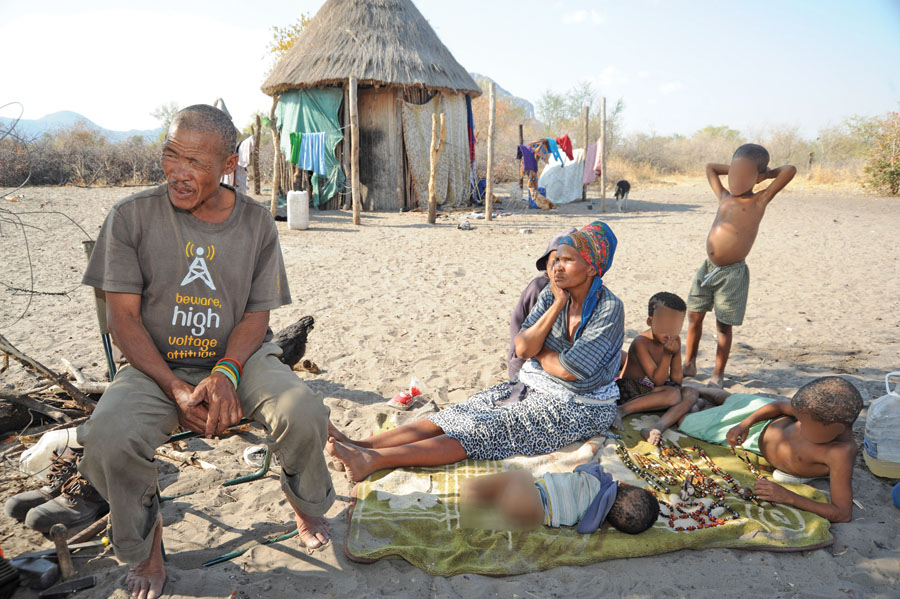
Though the flourishing fauna and flora in Nhabe remains an income generator for the state, life for residents in the area remains less than adequate. Visiting the area for the first time, one expects to see a developed area with a befitting lifestyle.
But alas, that is far from being the case. Reed and mud huts are common structures while residents earn a living through different laborious activities such as basket weaving, fishing, arable and pastoral farming.
Seloile Phuthego, a principal economics planner with North West District Council, is quick to admit that the region is the second poverty stricken with a total of 3 321 destitute persons as of July this year.
However, Phuthego is not able explain the disparity between the booming tourism sector and poverty level, “…there are so many players in the tourism sector such as Botswana Tourism Organisation, local government and the wildlife department and it is difficult to come up with a concrete answer.”
Though community based trusts are common here, residents continue to survive through government handouts. Phuthego explains with confidence that these trusts have for ages generated income and by then there was misappropriation. Later, government intervened and funds under trusts are now managed through the help of the District Commissioner`s office.
Under the current setup where there are no guidelines on how trusts can partner with government or non-governmental organisations, Phuthego is adamant that it would still remain difficult for these communities to develop.
She cites that, despite Khwae running a successful trust, the community does not have a health facility and there are no guidelines that permit residents to source aid or partner with government to set up such a facility.
Of late, she says funds from trusts have been used to build houses for community members, helping the needy and buying cars for transportation of school children. With organisations such as BALA and Swedish government coming on board, the economist explains that some training to empower residents has been ongoing.
For example, Shorobe Basketry members got an opportunity to better their crafting skills and learn new marketing trends such as selling their products through the net.
Phuthego suggests that resource royalties from Safaris should also be directed towards development of communities in Nhabe.
She explains that South African and Namibian trusts have upped the living standards of people within those communities.
She remains optimistic that benchmarking would also give an insight of running successful trusts that contribute towards bettering inhabitants` lifestyles.
However, trusts like Mababe rake in thousands through hunting. As of next year government has decided to move from consumptive to photography tourism. Now the ball is in
Nhabe residents` court to either take advantage of any opportunity that comes their way or sit back and remain a generation of beggars. Ends