


Volume 65 December 2026-January 2026 : Social
Digital migration
Author : Calviniah Kgautlhe
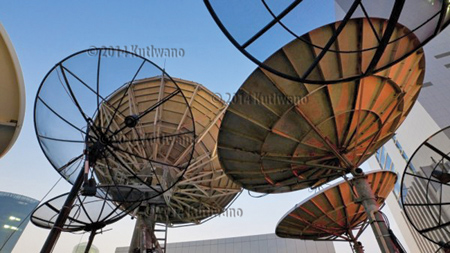
The clock is ticking, and the deadline is fast approaching for all countries across the globe to switch to a whole new system of broadcasting. All signals beep towards the revolutionary digital system as they dump the almost obsolete analogue. They tell us the new system will give you excellent pictures, great sound quality, convenience, multiple channels and a whole new outlook in broadcast media.
The picture painted is full of color and exciting. There are endless possibilities that this new technology brings. And come June 17, 2015 it is goodbye to analogue, as the world boldly steps into an altogether new era.
Notably, almost all African countries categorized as region one by International Telecommunication Union (ITU) settled for the European digital broadcasting standard, DVB-T2 while Botswana settled for a different standard, the Japanese system, Integrated Services Digital Broadcasting Terrestrial (ISDBT), a move which has incited criticism from some who say Botswana could be making a grave mistake as costs implications of its choice could be high on the consumer.
However government has said it preferred the P130 million ISDBT because of its outstanding features.
To gain understanding as to why Botswana remained steadfast on its choice despite criticism, Kutlwano spoke to the main engineer tasked with the digital migration project at Mass Media Complex, Calvin Goiletswe. He justifies Government`s position thus: “The Japanese model can operate effectively in region (1) which comprises, Africa, Europe and some parts of Asia, we did our own comparative tests between the European standard and the Japanese one and we found Japanese system better suited.”
The engineer says, “With one transmitter you can do three (3) modes of transmission from one transmitter, you can transmit to handheld gadgets such as lap tops, pcs, mobile devices such as cellular phones and normal fixed television sets at home. It also has Emergency Warning Broadcasting Services (EWBS), this system can turn on the TV as long as there is power to warn people of looming natural disasters.”
Furthermore Goiletswe says they found the Japanese standard cheaper in terms of implementation as only one transmitter is used as opposed to buying two transmitters to broadcast to the three different modes.
Goiletswe says the technology will allow easy access by cellphone users. Botswana has a high cellular phone penetration which is currently pegged at 144. “With our Japanese system one can access TV free of charge, but with the other system which has been chosen by countries in our region, you have to go through service providers to gain access to TV.
In Australia they are doing it, but they have to go through bo Mascom ba bone which means they have to pay. But ours is direct to the device. It will cater even for people in rural arrears who have no access to internet and they won`t need to pay for the service,” says Goiletswe.
He says any country going digital has to buy Set Top Boxes (STB) which can cost around 200- 300 Pula each. These will enable their TV sets to decode/convert digital signals to analogue so that it is understood by the whole receiver of the television set.
“Already we have South African companies approaching us to do STB for us, they are already marketing themselves. Even though this is Japanese system it does not mean that the manufacture is from Japan ie, the STBs that we are using now are from UK, Brazil, China, Japan. The transmitter that we are using here is from Europe, in Italy, this transmitter can do DVBT, DVBT-2, ISDBT or Analogue,” says Goiletswe rubbishing critiques who say equipment will have to be bought all the way from Japan.
“If I need this transmitter I do not have to travel to Japan, I can get it anywhere even from South Africa,” stresses Goiletswe.
Expounding on the benefits of the standard Botswana has chosen, he says: “ISDBT is like having the internet in the living room, it will give you information from various portals, and you can do your assignments from your living room. You can do videos from home and load them in the system and many more.
You can communicate with various departments, i.e Omang office can send you message in your TV to let you know that your Omang is ready without you having to call them or travel there to ask, these are just some of the examples. There is more,” he says.
Dr. Thulaganyo Mogobe,a lecturer at the University of Botswana and former member of National Broadcasting Board (NBB) was part of a task force that compiled a report whose recommendations were in favour of a different standard from ISDBT says he has no problem with the Japanese standard.
Although his committee had recommended the European one, “Botswana has chosen ISDBT but we advised that DVBT-2 was relevant to our environment. At a regional level we met with ICT committee and the consensus at the time was that the region must adopt DVB and then transition to DVBT-2.”
He says that even though countries are members of regional bodies, “We must not lose sight of the fact that we are sovereign states. We choose that which is in our national interest.
I do not know the reason why Botswana chose ISDBT but in principle Botswana has not done anything wrong.”
However Dr. Mogobe says for a country that prides itself in transparency and accountability it would have been better for Government to furnish doubting Thomases with the report that has enabled it to arrive at its choice to show technical superiority of merits of the two standards to avoid negative perceptions by the public.
“I am perplexed if government appoints a cross section of committee and tasks it come up with recommendations and in the end when it arrives at its own decision it makes no reference to the task force,” expresses Dr Mogobe.
Quizzed on the possible economic repercussions, Dr Mogobe fears Batswana might not enjoy economies of scale, “Other people suggest that it is going to be more expensive for Botswana to go ISDBT alone as opposed to joining other countries in the region.
We are not going to enjoy the economies of scale since we will have to import STBs straight from Japan,”
He opines that since digital migration is an expensive exercise Government should consider subsidizing STB prices especially for the less privileged.
And Dr Mogobe is not alone in his analysis. Dr. Molefhe Phirinyane is a researcher with BIDPA and he says, “There are far reaching implications for the choice of standard a country makes. Everything you do has implications.”
He concurs with Dr Mogobe, that “Botswana is disadvantaged in that we`ll have to keep on importing equipment from oversees.
South Africa has a good manufacturing base, so most investors will come and set up in South Africa to produces STBs.
The price of equipment is likely to come down, but since we have now adopted a Japanese system, we won`t have that advantage, we will have to buy equipment directly from Japan which will be costly,” opines Phirinyane.
On the question of whether Botswana`s choice has a bearing on Southern African Regional Integration efforts, he says regionally there is a detectable impact that is not weighty. “Some countries in Latin America initially had chosen the European standard but they later changed and chose the predominant standard in their region considering the advantages of using a similar standard in their region.
They wanted to take advantage of economies of scale,” says Phirinyane.
And so opinion varies.
The bottom-line though is that the digital era will revolutionise life and countries that have not made up their minds which standard they need must do so...for the deadline is very close. Ends