


Volume 50 Issue 9 - September 2012 : Social
When the music plays: Her story of trauma, loss
Author : Lucretia Chima
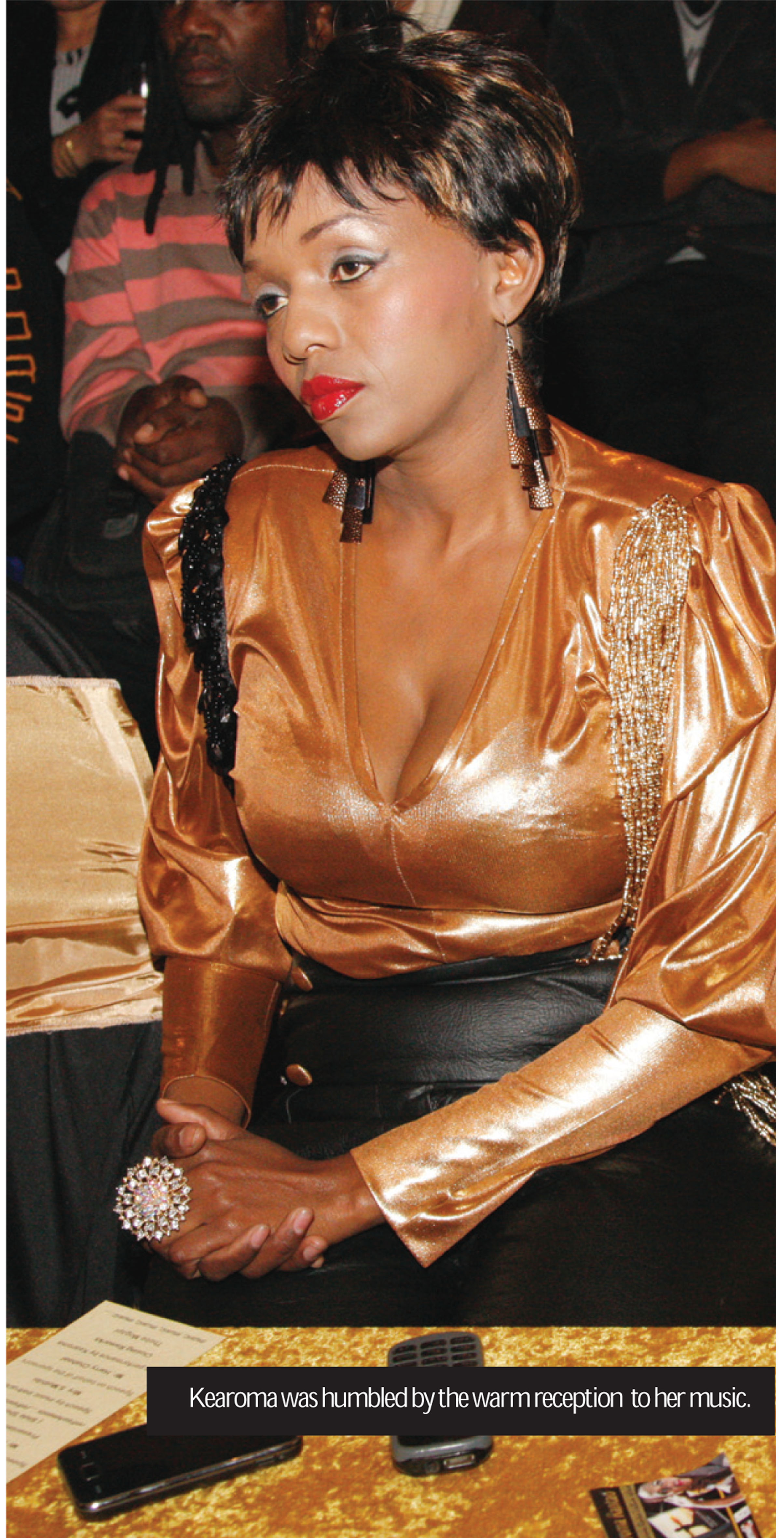
As a child she experienced first-hand the cruelty of South Africa’s apartheid system. She still remembers the events of the day the Afrikaner soldiers came. They killed his uncle’s wife and left the couple’s 12-year old son paralysed. Her uncle was injured but managed to escape. The memory would lodge in Kearoma’s soul, traumatising her childhood. However, who could tell that the scared starry-eyed little girl would one day and now as a 34-year old, wow Jazz lovers with her warm, scintillating voice as she tells her story through music?
You only need to listen to Kearoma’s When the music plays to understand the talent that has remained locked up in this strikingly beautiful and gentle petit, and to appreciate her million dollar voice. Kearoma or Mmadighe as her friends affectionately call her, comes from a music family.
Her Catechist parents, Peter and his wife Josephine Rantao, being staunch Catholic singers have played a great part in influencing Kearoma’s choice of career. As a young girl, her father loved to hear her sing and would ask her to sing him hymns. She loved it. Hear Kearoma’s mother sing, or better, hear mother and daughter sing at one of the Catholic masses and you will understand where this upcoming jazz star gets her talent.
“I inherited this talent from my mother while my father has always been my greatest fan. He always commended me for my voice which boosted my confidence,” she says, a smile lighting up her face. Kearoma’s eight-track album When the music plays is a story of her life, and really, worth your every dime.
Take her song Africa for example. In this song, Kearoma renders a heartrending narration of the plight of many African displaced families whose lives have been destroyed by political instability. She borrows much from her own experience and that of her refugee family. “You can imagine being woken up in the dead of the night and you are told in hushed tones that you have to leave home. You find yourselves huddled in a church and later learn you were running away from the Boers,” recalls Kearoma rather dejectedly. The murder of her aunt by the apartheid operatives and seeing her 12-year-old cousin lying paralysed from their bullet, in particular, traumatised her. A woman’s cry is another one of her emotion-filled songs. In the track, she calls for all and sundry to stop abandoning children. She has dedicated the track to children and women’s organisations. Kearoma is not new to the male dominated music industry.
She has used her almost operatic voice to sing various styles from pop to kwaito, gospel and jazz - a musical ability equalled by very few singers. Back in 2008 for example, she had opportunity to share the stage with the great jazz muso, Tshepo and also Bongo Maffin.
Then in 2009 she sung with the innovative Excutedge, whose music took the country by storm. When the group split up, she did not go into hiding but went to sing Cabaret at Gaborone Sun and Cresta hotels. She would later work with Vee in his Monate album. However, even as she sung with the fast paced Excutedge and Vee, she yearned to sing more expressive music. Growing up she had an abiding love for the music of the great Mirriam Makeba, that amazing African Jazz legend of all time. As she pondered upon Makeba’s music, a spark lit within her. She knew immediately that Jazz was the platform where she would express all the thoughts and pain and fears that had lurked within the recesses of her memory for many years.
Nonetheless, like other genres, Jazz is male dominated. If she were to make it, she would have to work harder than her male contemporaries. Fortunately for her, she had other options that could give her exposure. So, in 2008 she teamed up with three other singers and helped found Ladies of Jazz - a charitable group whose yearly charity music fundraiser unveiled the jazz storehouse that she is. Other members of the group included Punah Gabasiane Nnunu Ramogotsi and Queen of Jazz, Nono Siele. However, Nono left the group two years into its formation. When the music plays is a lesson that you should look out as well for the most unassuming member of a group. There is no doubt that Kearoma’s worldly-wise, earthy delivery will become a great influence on younger singers who desire to sing from the heart.
Along with her female contemporaries, Kearoma is proof that Botswana’s music has come of age. Undoubtedly, the music is of export quality. However, the appreciation of these stars’ music first has to come from locals who should buy it and help finance its growth, before it can be exported, reasons Kearoma. This will also go a long way in encouraging local musicians to take their trade more seriously. “We are our nation’s ambassadors …we speak to the world through our music, it is, therefore, important that we be exemplary,” she says. And it is commitment that will send the local girls soaring, reasons jazz DJ and promoter, Soares Katumbela. “They are committed and are working at a faster pace than their male counterparts,” he says. He believes pretty soon, with a little guidance, women such as Kearoma will give other international jazz musicians a run for their money! ENDS