


Volume 50 Issue 9 - September 2012 : Social
Plight of Settlement Dwellers
Author : Pako Lebanna
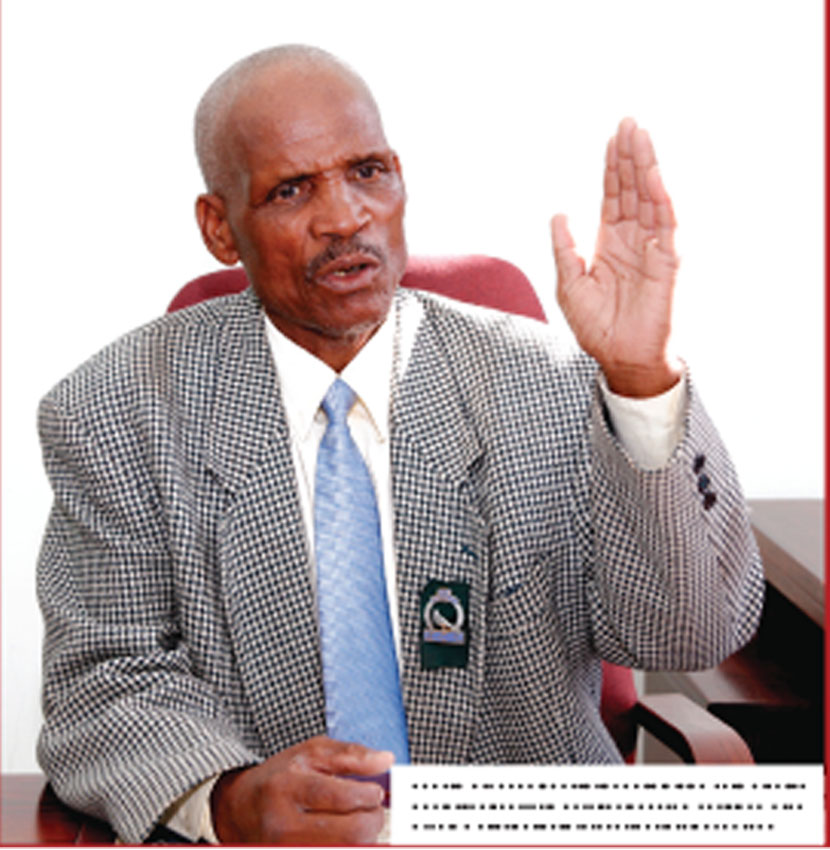
Rale Mogomane, 33, dreams of living in a city. He has been told life there is better. “Life here is a struggle, and I dream of going to the cities one day,” he says as he exchanges greetings with a team of Kutlwano journalists that had just arrived in his village. Not that it came as a shock to the reporters, for earlier on there was a feeling of emptiness as they traversed the countryside. This was of course besides the bitterly cold winds that blew across the vast and sandy terrain.
Citing major centres such as Jwaneng and Gaborone, or big villages such as Kanye or Molepolole, Mogomane says ever since he was born in 1979 the closest he has come to these places has been through tales. In fact, he declares that, save for occasional trips to nearby local hubs of Hukuntsi and Kang, his life has always revolved around the tiny settlement of Maake. Maake is a typical rural settlement sprawling some 34 kilometres north west of Hukuntsi in the Kgalagadi District. Here the dreadlocked Mogomane and some fellow Basarwa make ends meet by trading in leather products from animal hides.
However, for the young man it has never been enough though; “there is no source of livelihood here,” he argues, pointing out that in towns he will have the opportunity to market himself and his products particularly at trade shows that take place so often. With only a primary school certificate to his pride, Mogomane says educational opportunities in this area are few and far between and the culture of modern learning and its benefits have not yet been inculcated in his community. Although he turned to leather trade as a subsistence instinct, distance is a major setback. Maake is far off the main Trans- Kalahari tourist routes, and this has made it difficult for them in terms of marketing their products.
Notwithstanding, he says the Remote Area Dweller’s Programme (RADP) officers assist them in this regard. “But they also struggle to find markets for our products,” he says as he elegantly re- arranges the goods on display which are no doubt of good quality. A closer look at the products reveals the type that can definitely bring handsome returns if marketed at game parks and tourist centres. Only if it was elsewhere and not in Kgalagadi, the young leather goods trader imagines. Thus, to many the thought ofKalahari probably conjures up images of a pristine and peaceful dwelling for both man and nature, yet beneath the veil of the romantic visions, the reality of human hardship prevails. What is popularly known internationally -though in corrupted English - as ‘the Kalahari’, is to locals, Kgalagardi - a semi-arid expanse of land in the south western part of Botswana.
Livelihoods here are largely rural and poorer. The broader Kgalagadi is made up of different ethnic groups such as Basarwa, Bakgwatlheng, Bashaga, Bangologa, Batlharo and Coloureds- all of them are afflicted by the inherent poverty in the area. Omphile Mabote, of the Lehututu Village Development Committee (VDC) says her community has a problem accessing government interventions aimed at improving the lot of the poor.
“As VDCs we have a duty to oversee community development in our respective villages and assist our people to access government programmes but it is not easy,’ says Mabote. Although she credits civil servants in the region for always visiting their community to sensitise them on empowerment programmes the state provides, the going has always been tough due to seemingly complex processes involved. “For example, it is quite involving to get goats under the small stock programme, including getting quotations from faraway places like Gaborone,” she complains.
On the other hand, her colleague Laone Tsholofelo hails government interventions such as Ipelegeng through which roads are maintained and de-bushing is carried out, saying such tasks keep a handful of their people alive and active. However, she is of the feeling that the process of striking off people from the poverty list known as ‘graduation’ should not be rushed in a place such as Kgalagadi where permanent job opportunities are fewer than elsewhere. In another settlement, Lokgwabe, 19-year-old Opelo Sesupo says she would not want to live in Kgalagadi, though it is her parents’ birth place, and also where her relatives live.
“My parents hail from Kgalagadi; my father is from Lokgwabe while my mother comes from Lehututu, and, funny enough, I was born in Lobatse and schooled in Kanye, Gaborone, and Ghanzi,” she reveals. Unlike Mokgomane, who has never had the luck of leaving Kgalagadi, Sesupo says she currently stays with her mother who works in Molepolole. She does not imagine herself living in Lokgwabe permanently. “I would struggle to live here; no modern supermarkets; and no modern facilities,” she opines, adding that she finds it quiet in her home village as there are no music functions, and, above all, job opportunities.
Having passed her secondary schooling, Opelo is set to pursue a finance programme at the University of Botswana and, wanting to be a future career trailblazer, she sees her prospects in the eastern half of the country, and places such as Gaborone come to her mind. Opelo is not the only Kgalagadi soul who is intent on deserting the area – her parents’ place of abode. Since 1981, the Kgalagadi District has had a population density of just less than one person per square kilometer; births are offset by migration to other districts. According to the 2001 population census, 4 877 people left the district in the period between 1991 and 2001. The current Kgalagadi District Development Plan (DDP for 2009-2016) attributes the levels of migration to factors such as transfers of employees, lack of amenities, and employment opportunities. The DDP states that this could be minimised through creating an enabling environment for private sector participation through implementation of strategies such as the Revised Rural Development Policy of 2002 and Poverty Reduction Strategy 2003.
However, government’s intervention programmes, while cushioning the effects of extreme poverty on many of Kgalagadi’s dwellers, the panacea has still not been reached. A 2009 Central Statistics Office (CSO)’s first poverty map shows that the Kgalagadi District was the hardest hit with 19 133 poor people out of a total district population of 41 684. ENDS