


Volume 60 December 2024 : Business
Women drive diversity, inclusion programmes in mining sector
Author : Idah Basimane
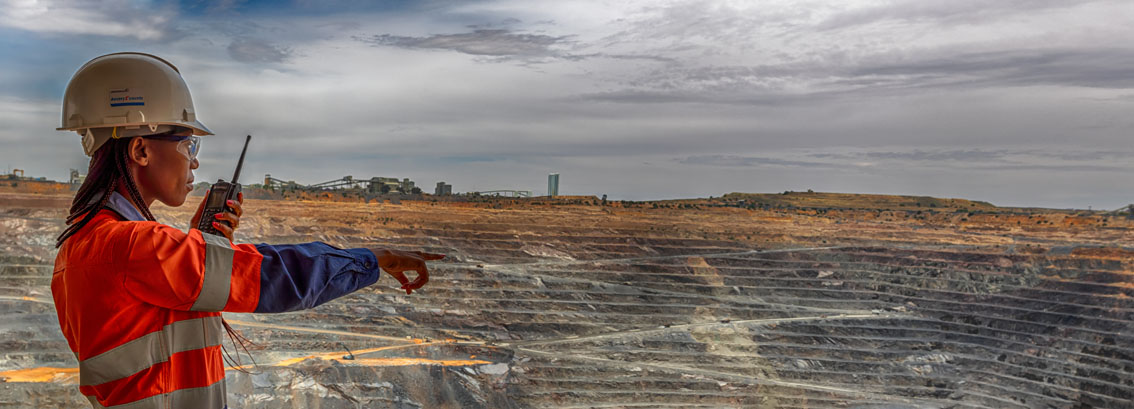
Women have the potential to change the face and trajectory of the mining industry. However, to partake meaningfully and contribute to this sector, they must be robust and innovative. Time and again, women in mining have proven they can go the extra mile to substantiate their proficiency, often demonstrating skills that surpass those of their male counterparts.
One such trailblazer is Ms Keneilwe Orapeleng, a mining manager at Morupule Coal Mine. As the first woman in Botswana to obtain an underground blasting license, Ms Orapeleng’s journey has been marked by both incredulity and resistance in a space traditionally dominated by men. “At times, I was questioned not only about my technical competence but also about my ability to lead in high-pressure underground operations,» she recounts. Inspired by Thomas A. Edison’s belief that «the most certain way to success is always to try just one more time,» Ms Orapeleng drew strength from perseverance.
By embracing some of the most demanding roles in the underground mining environment, she has gained hands-on experience and solidified her credibility. Her leadership focuses on building competent and diverse teams, ensuring that both women and men work collaboratively toward shared goals. Furthermore, her completion of the Management Development Programme at the University of Stellenbosch has equipped her to spearhead transformative change within the industry.
Ms Orapeleng advocates for the importance of diversity in thought, asserting that when women from various societies brainstorm together, they can enhance decision-making, strengthen governance, and improve economic performance. “Being female is not an excuse; it is not a weakness,” she emphasises. Instead, it represents a strong business case for gender diversity, which allows women to drive inclusive programs and influence important industry decisions.
In her view, innovation, collaboration, and resilience are essential tools for promoting diversity and inclusion in mining. With the industry rapidly evolving due to new technologies and automation, Ms Orapeleng asserts that women should embrace these changes to position themselves as leaders in the sector.
“Women can lead this transformation by engaging in projects that focus on sustainable mining practices and modern workplace solutions,” she explains.
Resilience, as she learned, helps women stay focused and motivated, even amidst challenges. She believes that to drive effective inclusion, women must develop innovative solutions to overcome barriers, such as mentorship programs and inclusive recruitment strategies. Moreover, resilient leaders are willing to challenge the status quo and influence decision-making at higher levels.
“To advance diversity programmes, women must lead courageous conversations, advocate for policies that promote gender equality, and embody the change they wish to see,” Ms Orapeleng asserts. By fostering an inclusive workplace culture, she believes that women can create environments where everyone has equal opportunities to succeed.
Her personal journey at Morupule Coal Mine illustrates that though the road may be challenging, it can also be incredibly rewarding. Ms Orapeleng highlights the importance of regional cooperation, noting that collaboration across the SADC region can empower more women to enter and thrive in the mining sector.
She encourages women to challenge traditional norms and seize new opportunities to mentor the next generation of female leaders. “Through perseverance, innovative thinking, and regional cooperation, we can ensure that the future of mining is inclusive, diverse, and sustainable,” she states.
Ms Orapeleng further emphasises that regional cooperation enables the exchange of best practices and mentorships or future leaders while also influencing policies that support gender equality in mining. Initiatives such as regional mentorship networks and collaborative advocacy efforts can help address common challenges faced by women in the industry. By forging stronger regional alliances, women can advocate for inclusive policies, such as equal access to leadership roles and recruitment in technical fields.
Public-private partnerships also play a crucial role in advancing diversity programs, she notes. Collaborating with governments, educational institutions, and companies throughout the region can provide women in mining with essential training, funding, and entrepreneurial opportunities. By creating such networks, they can promote career advancement and mitigate barriers that women encounter when attempting to enter or advance within the industry.
Ms Kefilwe Mokone, Senior Manager of Cultural Transformation and Diversity Inclusion, echoes these sentiments. She acknowledges the male-dominated nature of the industry, which research indicates has women constituting less than 10 per cent of the global mining workforce, predominantly in technical and leadership roles.
Ms Mokone describes diversity inclusion programs as initiatives that create equitable workplaces where all employees feel valued and supported across their diverse identities. These programs aim to challenge gender bias and stereotypes while promoting the inclusion of individuals from a wide range of backgrounds. She cites Debswana Diamond Company’s commitment to fostering a diverse, equitable, and inclusive environment as an exemplary model.
“As a global company, Debswana embraces gender inclusivity across multiple dimensions, including age, family status, race, and socio-economic background,” she explains, noting their alignment with the United Nations Sustainable Development Goals and International Labour Organization principles.
Ms Mokone believes it is essential for governments in the region to ensure that diversity inclusion programmes are backed by documented laws and act. She insists that providing women with access to education and financial support is vital for empowering them to fully engage in leadership and economic opportunities.
Another dedicated advocate for women in mining, Ms Maphutho Hunge, Chairperson of Women in Mining, Lesotho, shares that equipping women with the necessary skills is crucual for their mainstream participation in the industry.
She asserts that partnership is a vital tool for asserting women's roles in the male dominated sector. With the drive for diversity and inclusion gaining momentum, the efforts led by womenin mining across the SADC region inspire hope for a future where the industry reflects the diversity of its workforce. ENDS