


Volume 65 Issue 22-March-April 2025 : Heritage
Botswana Hidden Gems
Author : Idah Basimane
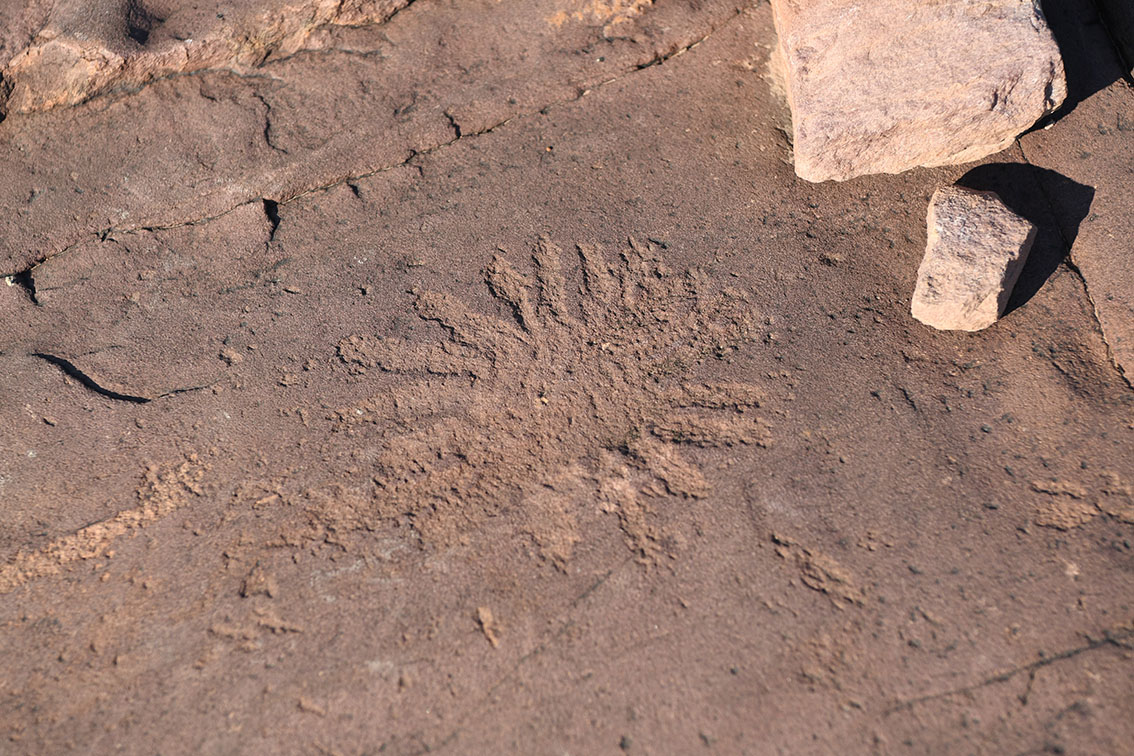
Botswana is home to unique historical sites that offer a glimpse into the ancient way of life of the Khoisan societies. Among these hidden treasures are the Kanbumewe Rock Engravings, a significant cultural site located just 7km from the Mamuno border with Namibia in Charleshill District.
These engravings are essential not only for their artistic value but also for their relevance in documenting the social and economic lifestyles of the indigenous peoples who once inhabited the region.
The Kanbumewe Rock Engravings provide a rich narrative of the area’s past through vibrant depictions of animals, human footprints, and intriguing geometric designs crafted by the Khoisan communities as far back as the late 18th century.
Mr Milton Tapela, Principal Curator and Regional Coordinator at the National Museum Office in the North West District, emphasised the uniqueness of the Kanbumewe site, stating that it contains some of the largest rock paintings and inscriptions in Botswana. “The engravings tell stories of ancestral beliefs and social dynamics, including depictions of snakes and children’s footprints,” Mr Tapela explained.
However, tourism to this remarkable site remains low. Mr Tapela noted that the main issue is a lack of awareness about the area’s significance, with most visitors being researchers or those who have already explored the Tsodilo Hills nearby.
While travellers who venture towards Kanbumewe report enjoying the historical richness of the area, many find the remoteness daunting.
According to Mr Phillip Segadika, Chief Curator for Archaeology and Monuments in Gaborone, the Kanbumewe site comprises four main areas: Mamuno sites 1 and 2, the Kanbumewe Rock Engravings, and Tshabanoga. “Currently, Kanbumewe is not open to the public but is available for research,” he said, noting that it represents an expanse of San artistic expression.
The term “Kanbumewe” means “water stone,” derived from local legends of a rock that reportedly had a constant flow of water. This abundant resource attracted hunters and gatherers, who would engrave their experiences while waiting for wildlife. The engravings showcase animal and human footprints, handprints, and geometric designs, all carved into the easily manipulated weathered sandstone.
Despite the proximity of these sites to the bustling Trans Kalahari Highway, Mr Segadika underscored the low volume of tourists visiting due to their isolated nature. The proximity to the Namibia border, while advantageous, ironically presents a barrier, as many trans-border tourists are primarily focused on crossing rather than exploring nearby attractions.
“In light of this, we are considering targeted marketing efforts to create awareness of these sites and encourage longer visit durations,” Mr Segadika elaborated. The potential for community benefit is significant, as tourism can lead to opportunities in guiding services, restaurants, and other visitor facilities.
In partnership with the community, Mr Segadika’s department is working to initiate a Community Trust in line with the Community-Based Natural Resource Management (CBNRM) policy. This initiative aims to provide environmental benefits, public education, and a sense of pride among different ethnic groups through ancestral heritage awareness.
Another site of interest is Tshabanoga, named for the abundance of snakes recorded there, which also features rock engravings and a well that would have been vital for ancient hunters and gatherers.
As efforts continue to raise awareness about the Kanbumewe Rock Engravings and their cultural significance, it is hoped that this hidden gem will soon become a must-visit destination for tourists seeking to explore Botswana’s rich history. ENDS