


Volume 65 Issue 22-March-April 2025 : Others
Unlimited Security Services dog training centre brings new breed of security
Author : Thamani Shabani
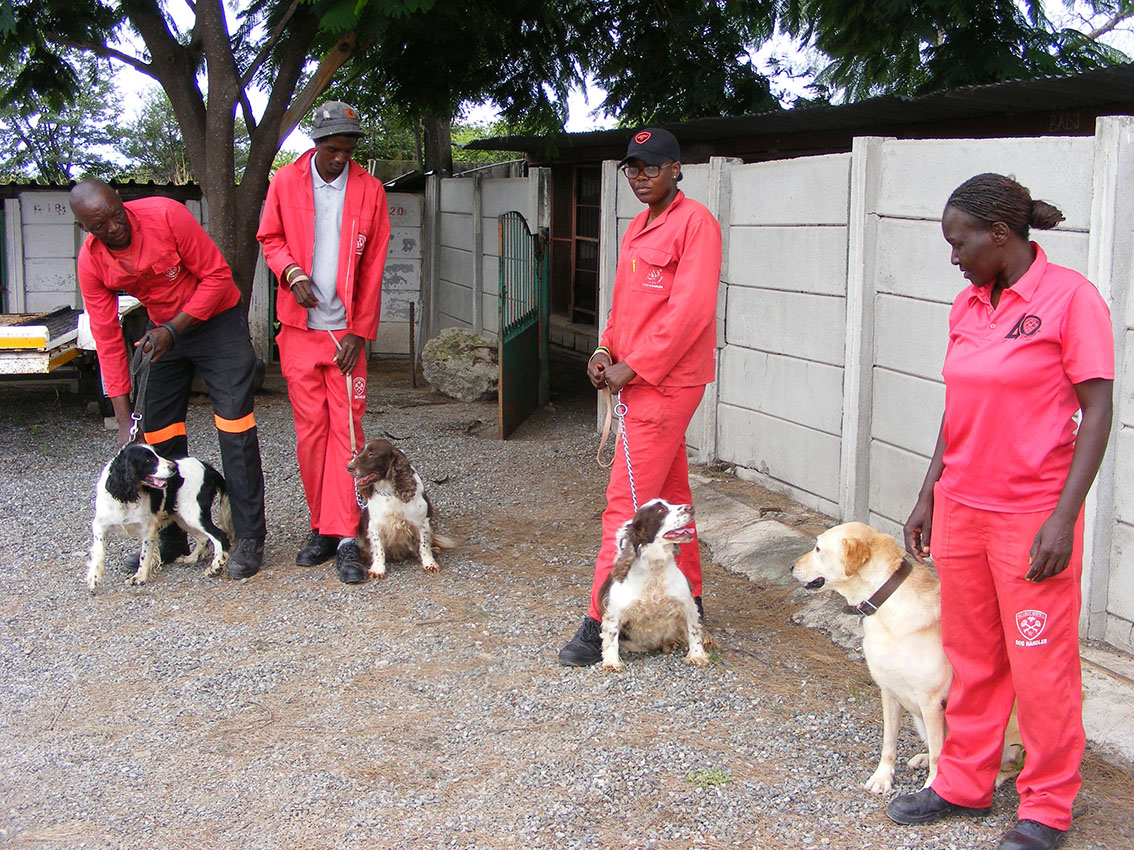
At the Unlimited Security Services Dog Training Centre, canines are more than just pets; they are graduates of a unique canine university. With their highly trained skills and disciplined behaviour, these dogs embody the qualities of the finest human graduates, showcasing obedience, intelligence, and loyalty. But don’t be deceived by their charming demeanour; when it is time to work, the dogs mean business. Their training in guarding, tracking, and arresting is exceptional, transforming them into fierce adversaries against any would-be criminal. Indeed, these dogs are defenders of justice, and their fierce loyalty makes them crucial allies in the fight against crime.
At a recent crime prevention expo in Tatisiding, the canines captivated audience with their flawless performances. Their agility, discipline, and unwavering determination left spectators in awe.
“It was a true testament to the effectiveness of these canines in deterring crime and keeping our community safe,” says Mr Dominic Khumo, General Manager of Security Services in Francistown.
A trained dog handler, Mr Khumo underlined the importance of the bond between humans and canines, which is being meticulously honed at the Francistown Dog Training Centre.
“The dogs represent various breeds and skills, from guard dogs to sniffer dogs, and they call this centre their ‘home.’ Here, they are trained to serve and protect in a country where crime is on the rise,” Mr Khumo elaborates.
As the only facility of its kind in the second city, the centre attracts clients from across the nation and beyond. With a resident population of 258 trained dogs, numerous others are employed by security companies in areas such as Kasane, Maun, and Selebi-Phikwe, as well as surrounding mines like Tati Nickel.
“The centre also specialises in training search and rescue dogs and therapy dogs for those seeking emotional support,” Mr Khumo notes, highlighting the diverse roles these canines fulfill.
Mr Khumo emphasises the importance of a strong human-canine bond, stressing that every dog has the potential to make a significant difference. He adds that the centre is dedicated to unlocking this potential.
Among the breeds featured are Rottweilers, German Shepherds, Pit Bulls, Labradors, English Springers, Malinois, and Pointers. Of particular note, he mentions that the Pit Bull is regarded as one of the most aggressive breeds in the realm of security, attracting significant attention from other security firms.
However, even the most well-behaved dogs can display unpredictable behaviour. In a striking incident, Maxpoint, a Pointer known for his gentle nature, attacked and killed another dog, showcasing that even the most docile canines can exhibit aggression.
“Just like a Pit Bull, a Pointer can also be dangerous. It all depends on how they are trained. Dogs that may appear calm can show incredible strength when in action,” Khumo explains.
The centre is not only focused on training but also on canine genetics, employing selective breeding to produce dogs with specific traits and temperaments.
“By mating breeds known for their protective nature, we can create offspring that are highly effective guard dogs,” he shares.
Once the mating process begins, Khumo explains that the female dogs receive care akin to that of an expectant human mother.
Beyond enhancing security, the dog training centre is positively impacting the economy. Employing 10 trained dog handlers , six of whom are female. The centre helps alleviate unemployment while offering valuable skills and opportunities for young people.
At the helm is a female manager, exemplifying the centre’s commitment to gender equality and empowerment.
“Our female manager is an exceptional leader who inspires others to break down barriers in this traditionally male-dominated field,” Mr Khumo lauds.
For Mr Donald Justice, a dog trainer at the centre, the experience is a paradox. While he takes pride in training these formidable canines, he remains cautious around them. “I consider myself the most hated person here because the dogs don’t recognise me as their trainer,” Mr Justice explains.
Hidden beneath a protective suit during training, Justice notes that the learning curve for each dog varies significantly. While some can grasp the basics in a matter of days, others may take weeks, emphasising the individual nature of dog training.
To safeguard these prized canines, each dog is implanted with a microchip to track them if stolen. “This not only deters potential thieves but also ensures our dogs remain safe and secure,” Justice concludes. ENDS