


Volume 65 Issue 22-March-April 2025 : Others
Safflower country's green colours
Author : Kutlwano
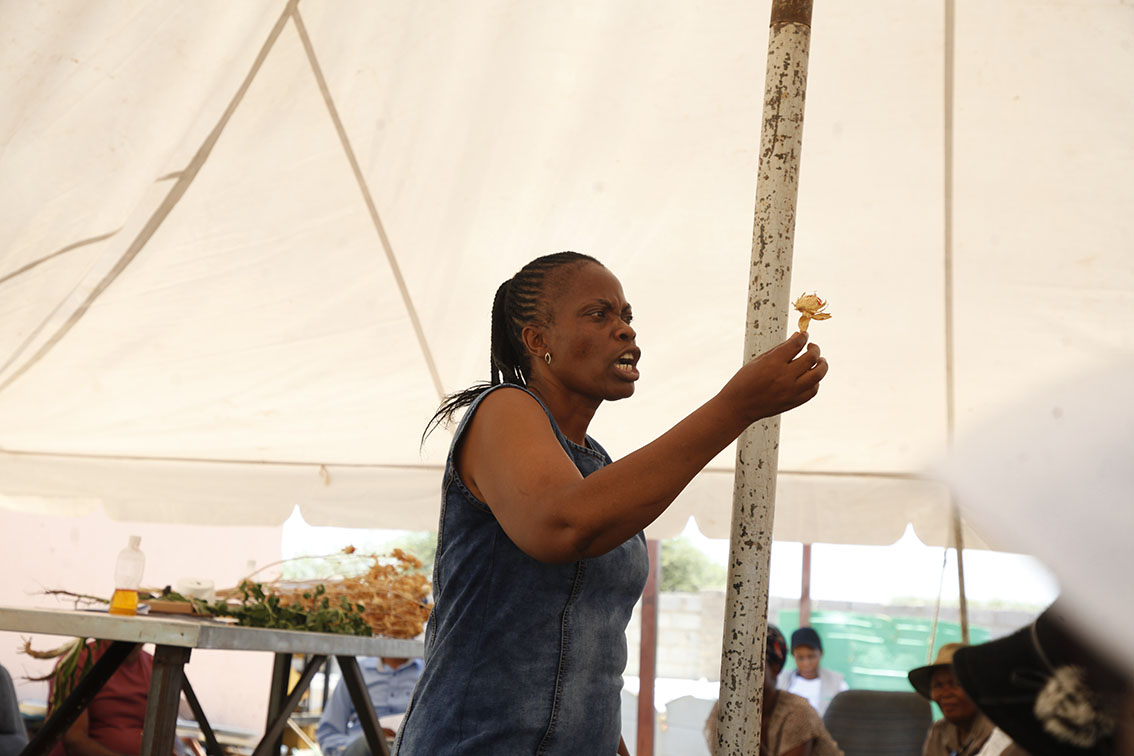
Various entrepreneurs have dubbed the Safflower plant a ‘green diamond.’ This versatile oilseed crop has emerged as a beacon of hope for economic diversification and job creation in the country.
Safflower is not just an ordinary plant; it serves multiple purposes, from producing cooking oil to being utilised as a vegetable crop, cut flower, forage crop for livestock, and even for industrial dye production. It boasts impressive resilience, thriving in drought, heat, and cold conditions while flourishing in saline environments. Countries like Greece, India, Australia, the USA, Iran, Iraq, Israel, and Turkey have successfully cultivated Safflower, with seeds imported from these areas.
Unlike many crops, Safflower flourishes with only manure instead of fertilisers, making it an economical choice for farmers. Although it can tolerate freezing temperatures as low as four degrees Celsius during winter, it requires careful attention during its critical early growth stages, especially a steady water supply to aid germination. Additionally, effective weed control is vital for ensuring a successful yield.
Margaret Mokgethe, a proactive entrepreneur, has been cultivating Safflower in Botswana since 2022. Partnering with Sarah Mosarwe, the duo formed KCM Gardens, a visionary company committed to the organic production of Safflower. Located in Metsimotlhabe, they are exploring innovative applications of Safflower oil, notably in cosmetic products.
“We see Safflower as a high-value crop. The potential applications are limitless. “We’ve been conducting workshops to educate fellow entrepreneurs on Safflower cultivation,” Mokgethe shares with Kutlwano.
Although their cosmetic products are not yet available in stores due to low production capacity, they are actively selling to individuals, particularly those attending their workshops.
Mokgethe is enthusiastic about mobilising more Batswana entrepreneurs to grow Safflower, aiming to create associations or cooperatives that can process Safflower oil and other related products.
“This crop can significantly transform the lives of many Batswana for the better. We have self-funded this initiative without any external financial assistance,” she added.
Prof. Vallantino Emongor from Botswana University of Agriculture & Natural Resources (BUAN) has praised the efforts of Batswana engaging in Safflower production. He applauds KCM Gardens for their significant contributions, reiterating that proper planting techniques can enhance Botswana’s economic landscape.
“Safflower has immense potential, it can serve as food for both people and animals, and its oil quality is on par with olive oil.”
After the extraction of Safflower oil, the residual cake, rich in protein (20-24 per cent), can be used for animal feed, maximizing resource utilisation from the crop.
In Rakops, a group of 30 women have been cultivating Safflower since 2021, significantly improving their lives—especially those impacted by gender-based violence (GBV). Nyaladzi Madzikigwa, the group’s director, noted, “We have been able to sell locally Safflower products such as green tea, petal tea, smoothie ingredients, and animal feed. Our success is a testament to our hard work.”
The group formed with an understanding that financial instability is a root cause of GBV, and through their agricultural efforts, they are positively impacting their community. “We see the American market as an opportunity to export oil, which we consider our diamond,” added Madzikigwa.
One of the Safflower standout features is its rapid return on investment; entrepreneurs can start reaping the benefits within just four weeks of planting. The plant leaves produce red and yellow dyes used in dairy products, whiskies, and confections, while its seed oil is an excellent health choice, supporting cholesterol-reducing diets and providing essential vitamins like B6, A, and C.
The oil also plays a role in producing margarine, and its flowers have medicinal applications, assisting with various ailments such as coronary artery disease, menstrual and menopausal issues, and high blood pressure.
As Botswana continues to explore the vast potential of Safflower, it stands on the brink of a green revolution that could foster economic growth and empower communities across the nation. ENDS