


Kutlwano : Business
Agro processing Significant to economic boost
Author : Idah Basimane
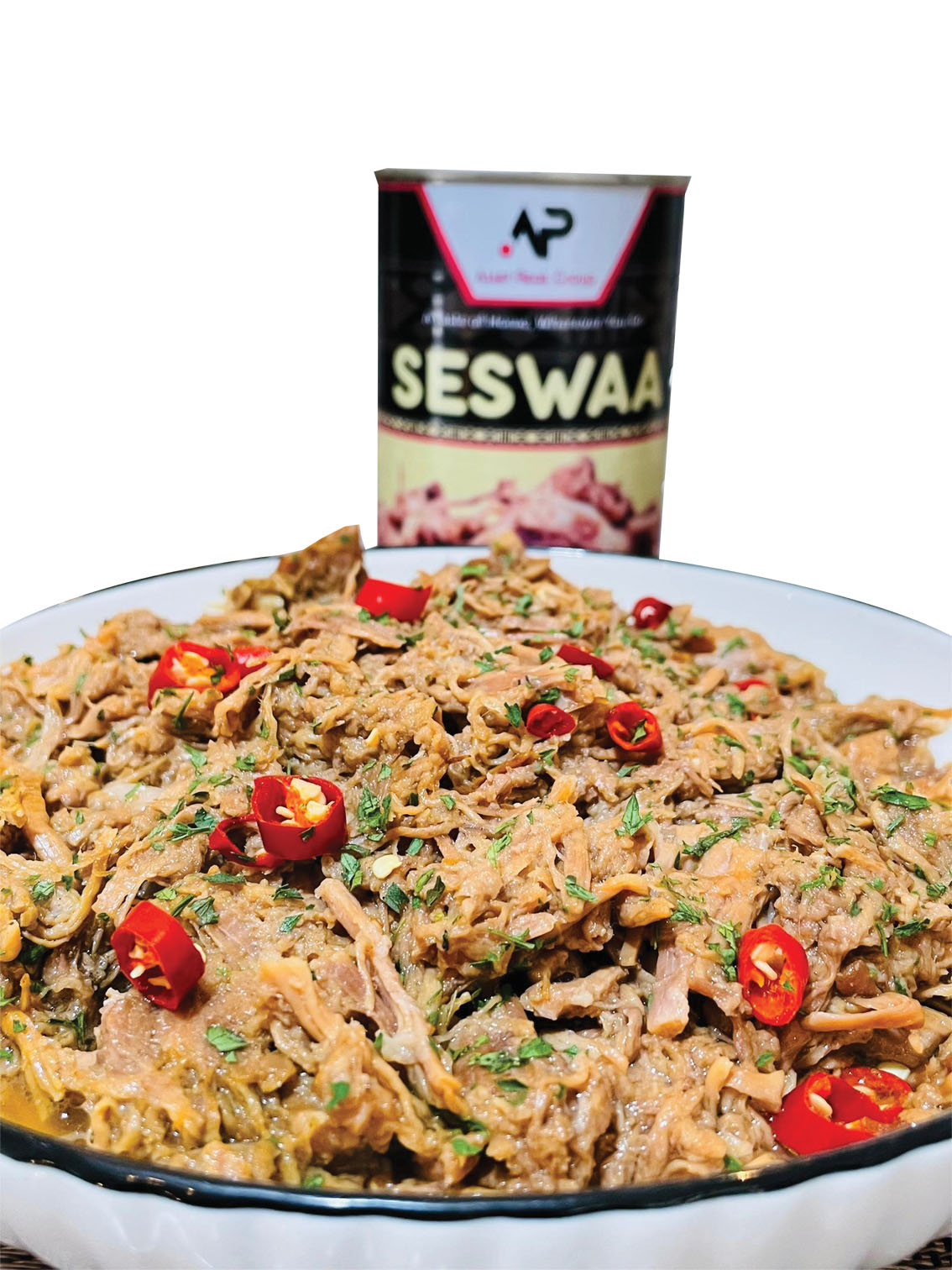
Agro-processing refers to foods that transform raw agricultural materials into a more sustainable, higher-quality product that consumers demand and are willing to pay for.
As an art, it is most significant to note that, agro-processing industry has been around for many years and is evolving daily, creating jobs in various sectors and preparing opportunities for local and international markets.
The agro-processing market also helps ensure consumers’ food quality and security by reducing food waste and minimizing contamination risks.
One such agro-processing startup is on the pine line in the advanced development stage of producing canned traditional relishes in Botswana.
It focuses on industrializing local flavors into high-value, shelf-stable products through modern food science and strategic value-chain integration.
To date, the company has successfully developed product samples, secured technical partnerships for quality assurance, and validated strong consumer demand through market trials.
The benevolent Motswana Omphile Bayani, a forward-thinking agribusiness entrepreneur standing at the intersection of agricultural science and economic transformation, owns the Asset Peak Group.
As the company moves towards its launch, its main goal is to bridge the gap between traditional heritage and modern retail, creating a scalable manufacturing model that empowers local farmers and reduces reliance on food imports.
The business is actively dismantling the image of agriculture as a subsistence activity, instead presenting it as a modern, high-tech and investment-worthy sector.
Its mission is clear: to ensure that Botswana’s indigenous flavors and agricultural potential are recognized on the global stage, contributing tangibly to national food security and long-term economic resilience.
A proud alumnus of the Botswana University of Agriculture and Natural Resources (BUAN) with a degree in Agricultural Economics, Bayani has spent the last few years proving that agriculture is not just about farming; it is about high-level business systems and food innovation.
It was during his time in broiler incubation and enterprise development that sharpened his commercial edge.
For Bayani, productivity is meaningless without market alignment. This conviction led to the founding of his business.
He took the opportunity, used his company for consultancy, training and scaling agribusiness models that are tailor-made for Agro-business in Botswana’s unique climate.
Today, Bayani is the driving force behind a groundbreaking shift in Botswana’s food industry; the commercialization of canned seswaa (pounded meat).
“Currently in an advanced development phase, this flagship project has already seen successful product testing and high consumer acceptance,” he says.
Canning seswaa, for the 33-year-old Francistown born and raised man, is more than a business venture; it is a strategic intervention.
By transforming a beloved traditional delicacy into a shelf-stable, export-ready product, he is stabilizing markets for local livestock producers and reducing the nation’s reliance on imported processed meats.
It is worth noting that the man uses his platform in diverse ways including to advocate for systemic change in the agro industry.
“Through my work with TemoRise and the Agri-Finance Summit, I managed to bridge the gap between farmers and financiers, ensuring that the next generation of entrepreneurs have capital to match their ambition,” he notes.
He was prompted to venture in this business after he realized that the only way to retain wealth within Botswana borders and ensure long-term food security was to move up the value chain through agro-processing.
“We are a beef-producing powerhouse, yet our shelves are dominated by imported processed meats. By focusing on raw beef exports, we miss the opportunity for local value addition, leaving our farmers vulnerable to price volatility and spoilage,” he observes.
He therefore sees seswaa as the obvious choice for the transformation, despite being a national culinary staple, which takes time to prepare.
“By canning seswaa, I am bridging the gap between traditional authenticity and modern convenience, making a beloved dish shelf-stable, safe and retail-ready,” he believes.
However, Bayani’s knowledge is not about launching a product; it is noticeable. It is proving that indigenous flavors can meet global industrial standards.
More importantly, creating a consistent market for local livestock producers, and shifting Botswana from a supplier of raw materials to a leader in value-added food systems.
His company aligns with Vision 2036 by transitioning Botswana from a raw-resource exporter to a high-productivity industrial state.
Through the production of canned seswaa and chicken stew, the company drives sustainable economic development via four key strategic areas.
These are Value Addition & Import Substitution, that is processing livestock locally. The company retains economic value within local borders, strengthening the domestic manufacturing base.
In Value Chain Integration, Bayani’s model provides farmers with a predictable market off-take, stabilizing rural incomes. This creates a ‘multiple effect’ that stimulates growth in downstream sectors like packaging, logistics, and retail.
The business utilizes modern food-science and international quality standards (SABS/ISO), transforming traditional delicacy into a shelf-stable, export-ready commodity that reduces post-slaughter waste, that is only on the Innovation & Competitiveness side of the country’s economy.
Moving up the value chain creates diverse, high-skilled jobs from food science, when visualizing Inclusive Growth, to supply chain management offering sustainable livelihoods for the youth and bolstering national food security.
Venturing into meat canning in Botswana involves four primary challenges; Infrastructure and Capital, Compliance Ceiling, Consumer Trust, and Biodiversity Risks (FMD) outbreaks cause supply chain volatility, requiring resilient sourcing strategies to bypass movement restrictions.
The Asset Peak Group’s milestones demonstrate a dual commitment to food innovation and the broader economic empowerment of Botswana’s agricultural sector.
It has successfully navigated the transition from concept to validated product with its canned seswaa.
In collaboration with Botswana’s National Agricultural Research and Development Institute (NARDI,) the management has developed their initial samples to ensure they met rigorous safety and quality standards without compromising the authentic flavor and texture of the traditional dish.
“We then moved to rigorous market testing, conducting consumer acceptance surveys at high-profile events in 2025, including the National Agricultural Show and the 21st RUFORUM Annual General Meeting. The overwhelmingly positive feedback from policymakers, farmers and retailers supported by technical and research credibility from (BUAN) has confirmed a robust market demand and positioned the company for full-scale commercial production,” he explains.
However since its inception, The Asset Peak Group has been supported by NARDI, which plays a key role in backup of agro-processing and value addition.
In 2020, NARDI gave The Asset Peak Group a quotation for consultancy services (Technical description-canned chicken stew and canned beef (seswaa).
The Asset Peak Group procured technical description documents for the two products.
NARDI processed hundred units of canned seswaa for Bayani to carry out market test.
Dr Ntshepisa Lebetwa, Senior Research Scientist at NARDI, thinks Batswana should embark in agro-processing because canning business falls under the value addition of meat.
It has the potential to directly address Botswana’s economic, social and food security at the same time leveraging the country’s strong livestock base.
More to that, he observes that Batswana should venture into and use the opportunity because of the already available livestock base, in order to reduce meat losses/waste, improve food security and job creation.
Dr Lebetwa mentions that NARDI assisted 422 Batswana who ventured into fruit and vegetable products, 22 of dairy products, 53 of meat products, 93 of vegetable oil extracts & nut products and 228 of food safety. ENDS