


Vol 66 Issue 26 October-December 2026 : Others
SEROWE AND TLOKWENG COLLEGES help shape education in Botswana
Author : Idah Basimane
For many decades, education has been a primary tool for personal upliftment and national development in Botswana.
Knowledge equips individuals with different types of skills, which significantly enhances their chances of prosperity.
A closer look into the development of education in Botswana indicates that it was pioneered by early missionary work, particularly by David Livingstone in the 1840s.
However, the development truly gained momentum after the country gained independence from Britain in 1966.
Despite being hamstrung by a weak economy, the new government under first President Sir Seretse Khama saw the importance of investing significant portions of national budgets into the education sector development.
To them, education was a tool for human capital development and nation building.
Primary schools and other learning institutions started mushrooming around the country in the 1960s and 1970s as a result of that investment, driving enrollment and literacy rates up.
A fully structured basic education started being provided by government compared to the basic community-built tribal schools of the pre-independence era.
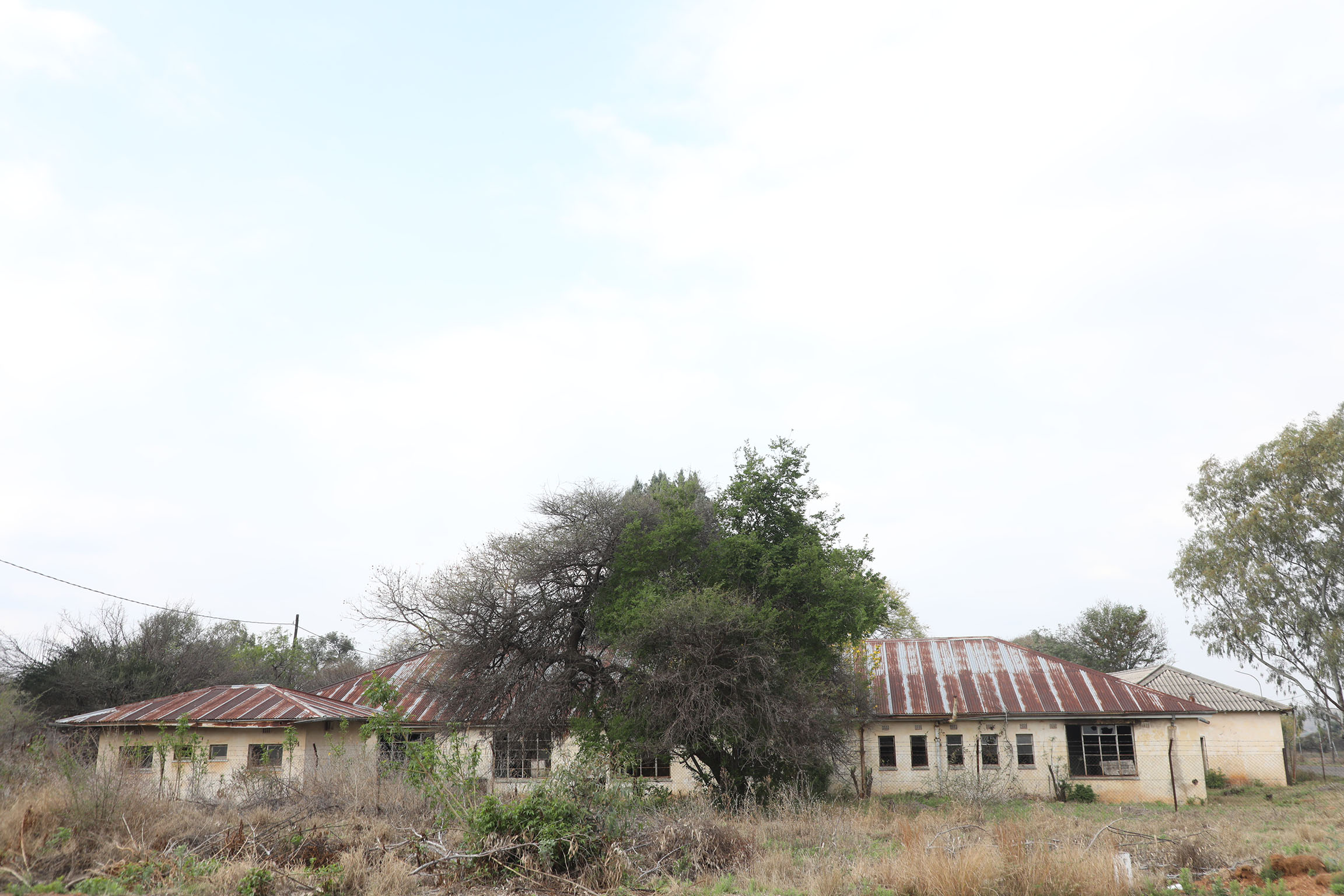
One of the institutions that played a key role in transformation of post-independence education in Botswana was the Serowe College of Education.
Built in the 1960s by the colonial protectorate, the college was vital in the training of teachers who then went on to teach at the new primary schools constructed by government after independence.
The college has evolved over the years from a basic teacher training institution to a key public college focused on primary and early childhood educator preparation.
In the 1960s and early 70s, it trained female teachers only, which reflected the government`s intention to expand education and employment opportunities for women.
The institution operated like a boarding school and student teachers wore a uniform.
Matrons were available to take care of the student teachers, who were woken up by sirens in the mornings.
In 1963, it officially changed its name to Serowe Teacher Training College and offered Primary Lower (PL) and Primary Higher (PH) Certificate Courses.
However, the institution was upgraded to offer a Primary Teachers Certificate (PTC) from 1973.
Enrolment at the institution was between 90 and 100 students, who used only two hostels called Naledi and Lesedi at that time.
Nowadays, the college has an enrolment of at least 400 and six hostels, consisting stand-alone blocks and double storey buildings.
The college was further upgraded in 1997 following recommendations of the Revised National Policy on Education of 1994, that all Primary Teacher Training Colleges should offer Diploma in Primary Education (DPE). The institution also started to enrol male students in that year.
Currently, the college runs two three-year programmes, being Diploma in Primary Education (DPE) and Diploma in Early Childhood Education (DECE).
Mr Dintle Rapoo, acting Director of Teacher Training and Development told Kutlwano in an interview that the college has engaged in community projects such as among others: providing science experiments to Manonnye Primary school Standard 6 learners to enhance understanding of science concepts.
He said there has also been donation of stationary and toiletry to the special needs unit in Motetshwane Primary School, Makolojwane Primary School and the Tsholofelo Rehabilitation Centre.
Mr Rapoo noted that the institution operated during the colonial and early post-independence eras, helping to build Botswana’s foundational education and workforce.
He said other institutions began to follow swiftly, developing the education system in Botswana such as Lobatse College of Education.
It was instituted in 1956 originally as the Lobatse Teacher Training College (TTC), following the relocation of a training center from Kanye due to a water shortage.
The institution then later became known as the Lobatse College of Education before closing permanently in 2009, for reasons among others, its old and dilapidated infrastructure.
Tlokweng College of Education opened its doors to the public in 1985 and has produced a substantial number of teachers who are serving and some of them have already retired.
There was transition in 1996 when the college was upgraded to offer Diploma in Primary Education where teachers began to specialise in one or two subjects including practical subjects.
Since the introduction of educational technology, the institution now prepares learners to focus on ICT equipment and how they can utilize them.
Tlokweng Teachers Training College Principal, Mr Modiakgotla Gabaipone notes that before any person could take any career, they must pass through the hands of a teacher who is able to build their character and what they could become in the future. ENDS