

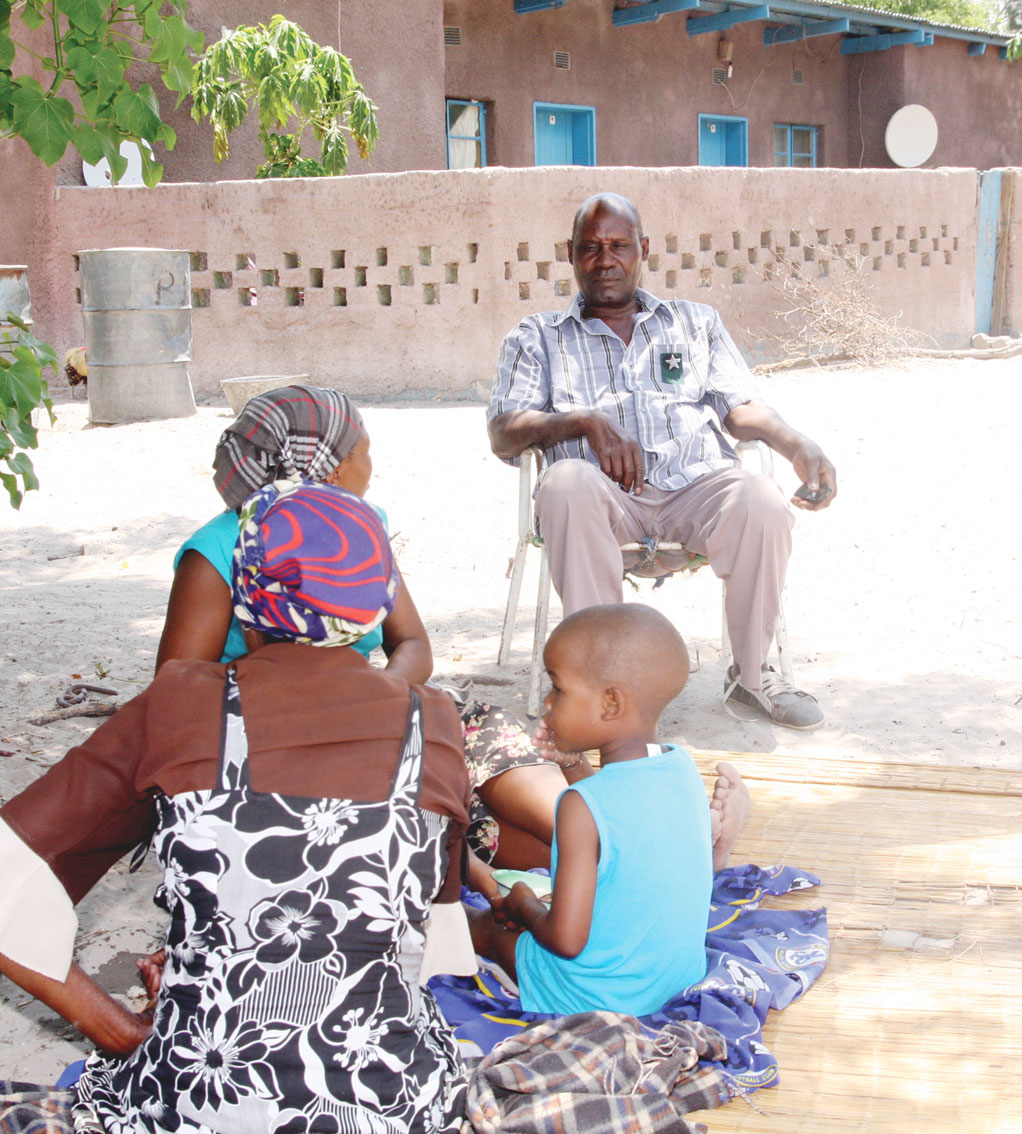

POLYGAMY
Source : Kutlwano
Author : Ketshepile More
Location : GHANZI
Event : Feature
The village is almost on the banks of the Chobe River which from time immemorial had been the source of water for Mabele residents. Time and again they would draw water from boreholes as it is much easier and less risky compared to the perennial river.
Of late, things have changed as they get water from Water Utilities Corporation (WUC) from Kasane, a move that local headman of records, Richard Mbanga, regrets as they would sometimes go for weeks without water.
The village also has a primary school and a health post manned by two nurses while doctors once in a while come in from Kasane.
As with every village in Botswana, Mabele also has youth volunteers who help “clean” crime in their village. Given its far flung geographic location, Mabele is still steeped in traditional cultural practices.
For instance, they still believe in the traditional ritual of rainmaking while polygamy is still openly and proudly practised.
Regardless of how one views it, polygamy will always be a part of African culture one way or the other.
That is notwithstanding the modernity that has swept most African norms to a state of redundancy.
Research has also shown that polygamy exists in Africa because of the fact that in some cases it intertwines both culture and religion.
“We still practice it in our society but we have realised that our youth are not interested. Therefore, we cannot force it upon them,” remarks Mbanga.
Mbanga says the youth view it as archaic, barbaric and overtaken by events but the aged maintain their traditional stance given what Benjamin Serome says.
He argues that the youth want to engage in their own self-styled polygamy by being promiscuous.
According to Serome, in the past the first wife was consulted when a man wanted to marry another wife.
As a result, Serome says things were done accordingly and there was peace among families.
“But today`s youth are stubborn, they want to do things their way and fights erupt,” says Serome.
But what usually were the reasons to have a polygamous family?
A snap survey reveals factors such as family planning method as it was believed that polygamy gave a woman space to rest before trying for another child. One other reason was that women were safer in large households and also that it was agriculturally easier to have a big family to cultivate the fields.
Serome says one of the major reasons for Basubiya to practice polygamy was to curb infidelity as the first wife would have to approve of his husband to marry a second wife.
And so he believes polygamy can still be practised, and cautions the youth not to hide behind economic pressures.
“Modern life is not as expensive as today`s youth want people to believe,” charges Serome. He explains that youth today do not do things properly and blame their mistakes on economic challenges.
Traditionally, households were provided for by agriculture.
“That is why polygamy existed because a man acquired one big ploughing field for cultivation to his wives and family,” explains Serome.
He further explains that women were also given inheritance accordingly in the event the man died.
Up to date, Basubiya still practise polygamy and Mbanga explains that as long as a man can provide for his wives and family they allow it in their society
Teaser:
As with every village in Botswana, Mabele also has youth volunteers who help “clean” crime in their village. Given its far flung geographic location, Mabele is still steeped in traditional cultural practices. For instance, they still believe in the traditional ritual of rainmaking while polygamy is still openly and proudly practised...


