


Achieving a simple eco-friendly method fertilizer by fermentation
Source : Kutlwano
Author : Idah Basimane
Location : Gaborone
Event : Interview
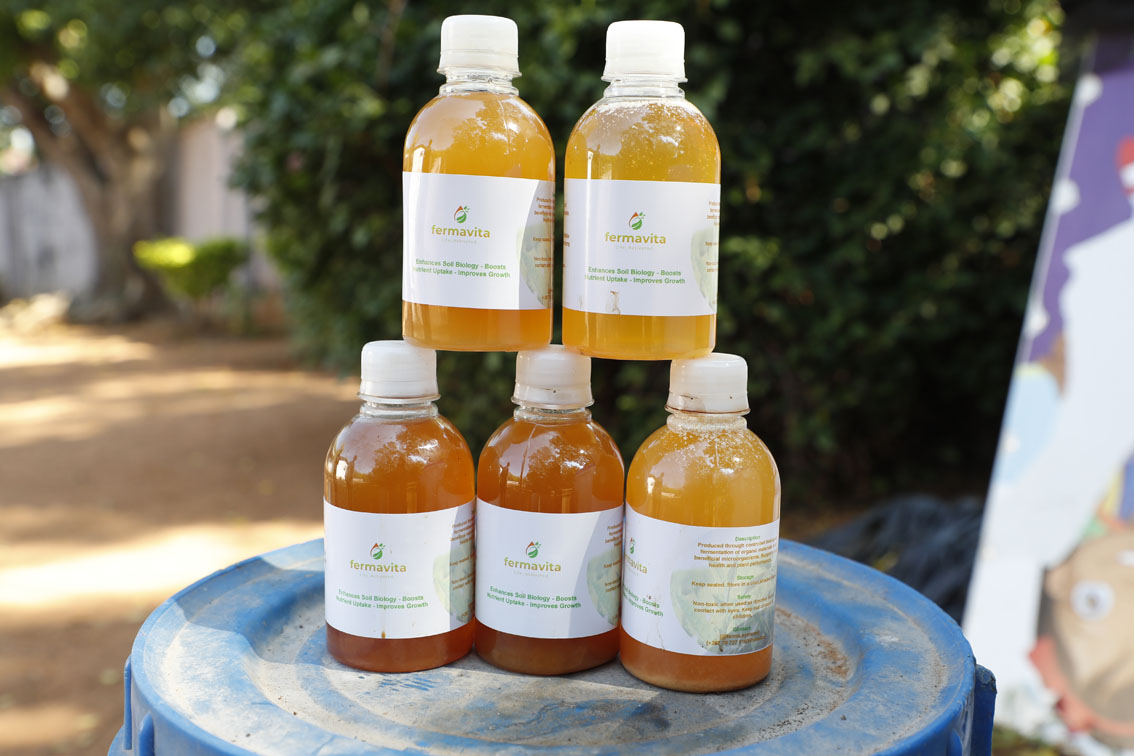
Organic fertilizers mainly help sustainable agriculture by closing the nutrient loop, enriching soil health, reducing reliance on expensive synthetic chemicals, and lowering greenhouse gas emissions (excess emissions from human activities).
Using them can also lead to higher crop resilience, long-term cost savings for growers and enforces climate resilience agriculture (farming systems designed to withstand and adapt to climate change impacts-such as droughts, floods and extreme heat-while maintaining food production).
Inspired by his late aunt who believed that organic food was the first medicine of any home, a 25-year-old Tobane native, Freddy Rakwadi has decided to venture in the production of these very important fertilizers.
Rakwadi’s aunt, who was suffering from cancer, strongly believed that the chemicals that people use to grow food were the reason why a lot of people got sick.
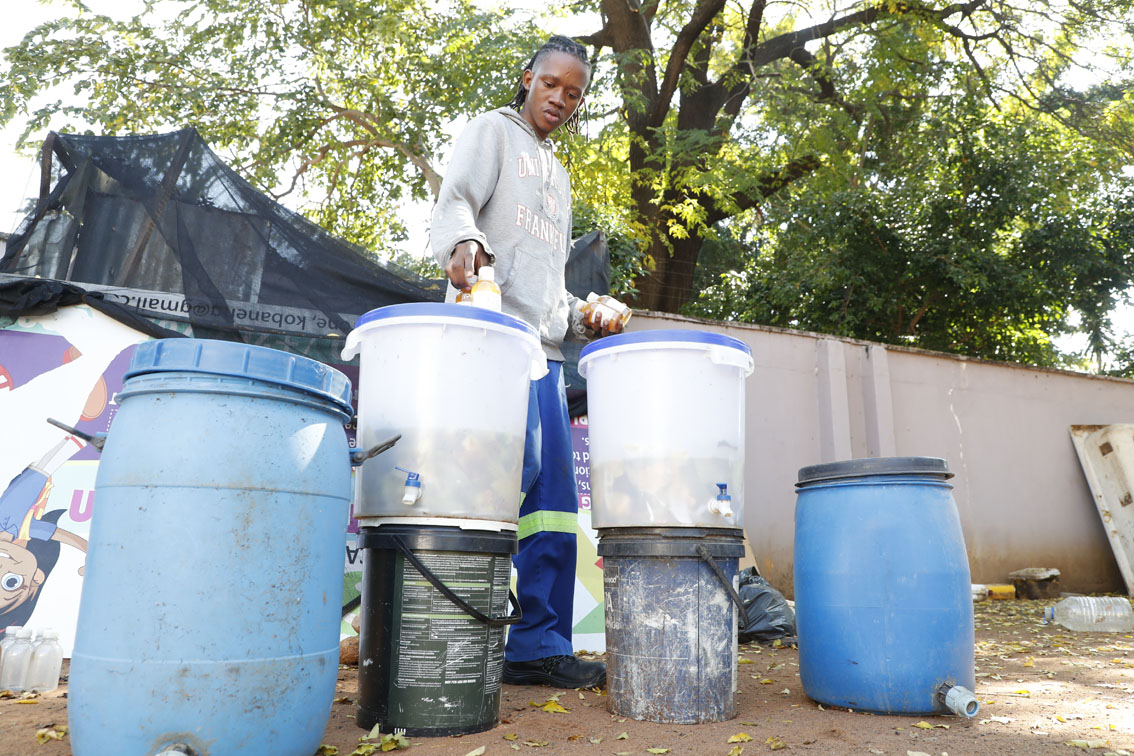
After his aunt passed on, Rakwadi was determined to find how humanity could produce natural fertilizers to replace the synthetic chemicals. That is when he discovered the fermentation process.
Although his company, Bio Crude Innovations, is still at infancy stage, the whole idea is to make an impact in improving food security in Botswana.
He uses food waste from restaurants after noticing that common products in the market are made from agricultural waste such as manure, while no one takes food waste.
A graduate of the Botswana International University of Science and Technology (BUIST), Rakwadi is adamant that in three years, his fertilizers will be in every shop in Botswana.
“Africans needs a lot of proof before they can trust. Currently my company is trying to build proof by getting more feedback from people who are supporting it,” he explains in an interview.
The supporters of his company are gardeners, his father’s farm, nurseries and schools who all have the notion; food security can benefit people using waste from any community.
Optimistic about his journey, which he commenced in 2019, he is getting mentorship from Botswana Innovation HUB, a 100 percent government entity that hosts sessions to assist him with ideas to work in the business and also to build the brand.
Furthermore, Rakwadi points that Bio Crude Innovations was founded on the belief that organic waste should never become landfill waste, since it holds biological value that can support food systems, soil regeneration and local sustainability.
He opines that urban organic waste in Botswana is still largely treated as landfill waste rather than as a resource with biological value.
Rakwadi says this creates multiple interconnected problems such as increasing landfill pressure, methane emissions, loss of nutrients from the local economy, weak urban food resilience and declining soil health dependence on imported agricultural inputs just to mention a few.
He explains further that he formed the company to process waste streams that other people avoid, more so that the system he uses adapts to Botswana’s climate and waste streams.
“We support decentralized sustainability ecosystems and we connect waste recovery with food resilience and soil regeneration,” he stated.
Mr Obakeng Segwagwe, Programmes Manager at Botswana Digital and Innovation Hub (BDIH) says emphasis is placed on the clarity of the problem being solved and the relevance of the solution to sustainable development priorities.
He notes that of more significance too is the Scalability and Commercial Viability.
“The solution should have strong growth potential and a viable business model. BDIH considers how easily the innovation can be replicated and expanded to serve both national and international markets,” he added. ENDS
Teaser:
The composting of organic waste transforms it into very rich and eco-friendly fertilizers, known as organic fertilizers, which are very useful for crops growth.


