

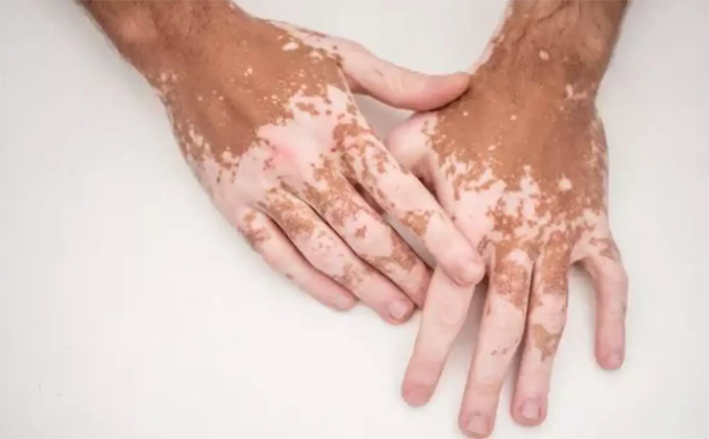
Undertaking Vitiligo
Source : Kutlwano
Author : Taboka Ngwako
Location : Gaborone
Event : Interview
World Vitiligo day observed on June 25th internationally, is an awareness day that gives an opportunity for people around the world to unite, raise awareness and rally for people living with Vitiligo.
Globally, about 1-2 per cent of the population has vitiligo.
According to Dr Dimpho Thobega, vitiligo is a skin disorder characterised by the loss of pigment in certain areas of the skin, resulting in white patches.
“While the exact cause of vitiligo is not fully understood, it is believed to involve a combination of genetic, autoimmune and environmental factors,” he says.
He says areas of the skin that loses pigment is called macules if they are less than one centimetre wide or has patches which are larger than one centimetre.
“If you have vitiligo on a part of your body that has hair, your hair may turn white or silver,” says Dr Thobega.
Dr Thobega explains that there are two types of vitiligo: segmental and non-segmental vitiligo.
“Non-segmental vitiligo does not have a specific area of occurrence and this means that the white patches can appear anywhere on the body,” he says.
He adds that it often begins on the finger tips, hands, feet, mouth or around the eyes.
“ It can also occur at any age, which means that one can be affected even when they are old,” he says.
He further states that segmental vitiligo occurs only on one part of the body, such as the arms or face and tends to spread more rapidly than non-segmental vitiligo.
“It is common in children and people who suffer from segmental vitiligo also experience loss of hair, eyebrows or eyelashes.
He says segmental vitiligo often progresses for about a year or so and then stops.
Dr Thobega further states that vitiligo affects all races and genders equally however it is more visible in people with darker skin tones.
“The condition occurs when your body’s immune system destroys melanocytes, melanocytes are skin cells that produce melanin, the chemical that gives skin its colour, or pigmentation,” he explains.
He says although vitiligo can develop in anyone at any age, macules or patches usually become apparent before age 30.
Outlining the symptoms of the condition, Dr Thobega says the main symptom of vitiligo is loss of natural colour or pigment, called depigmentation and that the depigmented patches can appear anywhere on the body and can affect skin, which develops milky-white patches, often on the hands, feet, arms, and face.
However, the patches can appear anywhere.
“This can happen on the scalp, eyebrow, eyelash, beard, and body hair,” he says.
He adds that the mucous membranes, such as the inside of the mouth or nose can also be affected.
Moreover, he indicates that a person with vitiligo occasionally may have family members who also have the disease.
He says that although there is no cure for vitiligo, treatments can be very effective at stopping the progression and reversing its effects, which may help skin tone appear more even.
“Treatment for vitiligo is not necessary, as the condition is not harmful to one’s body and is only cosmetic however If one has widespread vitiligo or their physical symptoms affect one’s emotional well-being, a healthcare provider can help find a treatment option to create a uniform skin tone by either restoring colour (repigmentation) or eliminating the remaining colour (depigmentation) in one’s skin,” he explains.
He further states that there are so many myths about vitiligo, especially in black communities and people often believe it has to do with some ancestral beliefs – fire caused by ancestors, being cursed, or needing some ritual cleansing but that is not at all what vitiligo is, it is a skin condition due to lack of melanin.
He also clarifies that despite some beliefs, vitiligo is not linked to cancer, albinism, or leprosy and is neither an infectious nor a physically harmful condition. ENDS


